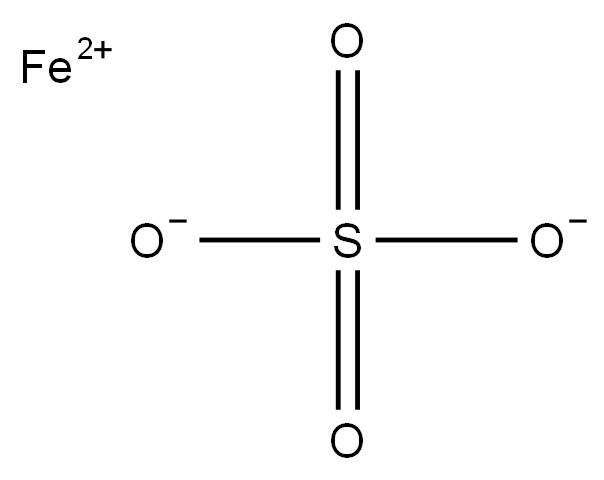
Ferrous sulfate is an inorganic metal salt substance, which can be used as a nutrient supplement (iron fortification agent); Fruit and vegetable hair color agent; It can also be used to make iron salt, iron oxide pigment, mordant, water purification agent, preservative, disinfectant, etc., as an anti-anemia drug in medicine
*The following content is generated by AI and is for reference only.
Ferrous sulfate, commonly known as iron(II) sulfate, is a vital inorganic compound widely utilized across various industrial and medical sectors. Its chemical formula is FeSO₄, typically appearing as blue-green crystals in its heptahydrate form (FeSO₄·7H₂O), while the anhydrous form is a white powder. The substance is identified by the CAS number 7720-78-7 for the heptahydrate and 10025-52-2 for the anhydrous variant. As a primary source of bioavailable iron, it plays a critical role in human health, serving as the standard treatment for iron deficiency anemia. By replenishing iron stores, ferrous sulfate facilitates hemoglobin synthesis, ensuring efficient oxygen transport throughout the body. It is also frequently prescribed to prevent anemia during pregnancy or in patients with chronic blood loss. Beyond medicine, this compound holds significant importance in water treatment industries, where it acts as an effective coagulant to remove phosphates and suspended solids from wastewater. In agriculture, it functions as a soil amendment to correct chlorosis caused by iron deficiencies in plants, promoting healthy green foliage growth. Furthermore, it is employed in the manufacturing of pigments, particularly Prussian blue, and serves as a precursor for other iron-based chemicals in the chemical industry. Historically, it was used as a tanning agent and ink dye. Despite its utility, proper handling is essential as it can be toxic in excessive amounts and may cause gastrointestinal irritation. The compound is generally stable but oxidizes slowly in air to form ferric sulfate. Due to its cost-effectiveness and versatility, ferrous sulfate remains a cornerstone material in global supply chains, bridging the gap between essential healthcare needs and large-scale industrial applications. Its multifaceted properties ensure its continued relevance in modern science and technology.







 (All Rights Reserved)