Product Description
Ethacridine lactate monohydrate 6402-23-9
AI Product Description
*The following content is generated by AI and is for reference only.
Ethacridine lactate monohydrate, commonly known by its trade name Acriflavine or simply Ethacridine, is a synthetic acridine derivative widely utilized in the medical and pharmaceutical sectors for its potent antiseptic properties. With the Chemical Abstracts Service (CAS) registry number 131-49-7, this compound exists as a pale yellow to orange crystalline powder. Its molecular formula is C₁₄H₁₆N₂O₃·C₃H₆O₃, representing the combination of ethacridine base with lactic acid in a one-to-one molar ratio, stabilized as a monohydrate. The presence of the water molecule in the crystal lattice distinguishes it from the anhydrous form, often influencing its solubility profile and stability during storage.
The primary application of Ethacridine lactate monohydrate lies in topical antisepsis. It functions effectively as a broad-spectrum antimicrobial agent, exhibiting significant activity against Gram-positive bacteria, including Staphylococcus aureus and Streptococcus species, as well as certain fungi and protozoa. Due to these characteristics, it has historically been employed in the treatment of various skin infections, wounds, burns, and mucous membrane conditions. In clinical settings, it is frequently formulated into solutions, ointments, and powders designed for wound irrigation, surgical site preparation, and the management of infected ulcers. Furthermore, its low toxicity when applied topically makes it suitable for use on sensitive areas, although systemic absorption should be avoided.
Beyond human medicine, this compound has found utility in veterinary practice for treating similar infections in animals. While modern antibiotic therapies have reduced some reliance on older antiseptics, Ethacridine lactate remains a valuable tool in specific scenarios where resistance to newer agents is a concern or for cost-effective disinfection protocols. It acts by intercalating into microbial DNA, thereby inhibiting replication and protein synthesis, which leads to cell death. Despite the availability of newer alternatives, its established safety profile and efficacy ensure its continued relevance in global pharmacopoeias as a reliable first-line topical antiseptic for minor to moderate bacterial infections.

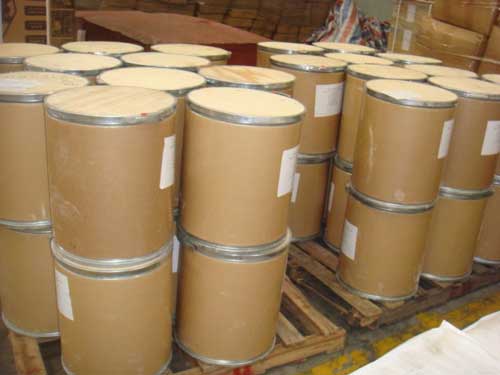










 (All Rights Reserved)



![(3R)-3-Amino-1-[3-(Trifluoromethyl)-5,6,7,8-Tetrahydro-1,2,4-Triazolo[4,3-A]Pyrazin-7-yl]-4-(2,4,5-T](https://eimg.pharmasources.com/image/product/20250402/e43f5153f3b91f760fdee40247460568jpg)

![3-(Trifluoromethyl)-5,6,7,8-Tetrahydro-[1,2,4]Triazolo[4,3-a]Pyrazine HCL](https://eimg.pharmasources.com/image/product/20250402/8ae4dd18f1fe219e41ad63ce9b3306d7jpg)

![4-[[[[6-[(Diethylamino)methyl]-2-naphthalenylmethoxy]carbonyllaminolbenzoic acid](https://eimg.pharmasources.com/image/20241206/xJCFsdgfMrHzqjtgeOixhGQHgVbKi7kAcoEqemzE.jpg)