Product Description
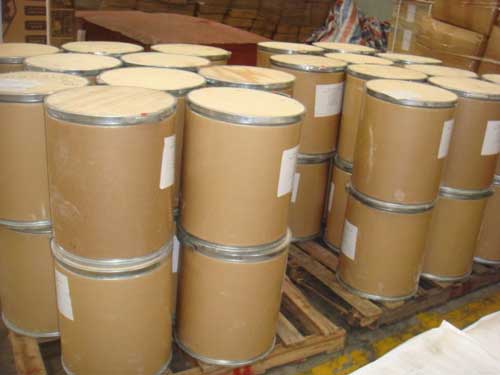
Dexamethasone palmitate ≥97.5% Hormone API made in china 14899-36-6
AI Product Description
*The following content is generated by AI and is for reference only.
Dexamethasone palmitate, a high-purity corticosteroid API manufactured in China with a purity level of ≥97.5%, serves as a vital long-acting derivative of dexamethasone. Chemically known by its CAS number 1608-38-4, this compound features the molecular formula C27H37FO6. It is synthesized by esterifying the hydroxyl group at position 21 of the dexamethasone molecule with palmitic acid, significantly altering its pharmacokinetic profile compared to the parent drug.
The primary pharmaceutical application of Dexamethasone palmitate lies in its formulation for depot injections. Due to the lipophilic nature of the palmitate ester, the compound exhibits slow release and prolonged duration of action when administered intramuscularly or intra-articularly. This makes it particularly effective for treating chronic inflammatory conditions where sustained therapeutic levels are required without frequent dosing. Common indications include severe rheumatoid arthritis, ankylosing spondylitis, bursitis, tendonitis, and other musculoskeletal disorders characterized by intense inflammation and pain. Furthermore, it is utilized in dermatological contexts for localized injection into inflamed lesions to reduce swelling and suppress immune responses locally.
As a hormone API produced in China, Dexamethasone palmitate meets rigorous international quality standards, ensuring consistency in potency and safety for global pharmaceutical markets. Its high purity grade (≥97.5%) guarantees minimal impurities, which is critical for injectable formulations to prevent adverse reactions. While sharing the anti-inflammatory, immunosuppressive, and antiproliferative properties of glucocorticoids, the esterification process specifically extends its biological half-life, allowing for less frequent administration schedules that improve patient compliance. Despite its efficacy, clinical use requires careful monitoring due to potential systemic side effects associated with prolonged steroid exposure, such as adrenal suppression, hyperglycemia, and osteoporosis. Consequently, it remains a cornerstone medication in managing complex autoimmune and inflammatory diseases, bridging the gap between short-acting oral steroids and immediate-release injectables.





 (All Rights Reserved)



![(3R)-3-Amino-1-[3-(Trifluoromethyl)-5,6,7,8-Tetrahydro-1,2,4-Triazolo[4,3-A]Pyrazin-7-yl]-4-(2,4,5-T](https://eimg.pharmasources.com/image/product/20250402/e43f5153f3b91f760fdee40247460568jpg)

![3-(Trifluoromethyl)-5,6,7,8-Tetrahydro-[1,2,4]Triazolo[4,3-a]Pyrazine HCL](https://eimg.pharmasources.com/image/product/20250402/8ae4dd18f1fe219e41ad63ce9b3306d7jpg)


![4-[[[[6-[(Diethylamino)methyl]-2-naphthalenylmethoxy]carbonyllaminolbenzoic acid](https://eimg.pharmasources.com/image/20241206/xJCFsdgfMrHzqjtgeOixhGQHgVbKi7kAcoEqemzE.jpg)