We are professional Raw Material Manufacturer, with more than 10 years' experience.
Please contact us for more information and detailed quotation
Email: sales12@sgonekbio.com
Phone/WhatsApp/Wechat: +86 13572550462

*The following content is generated by AI and is for reference only.
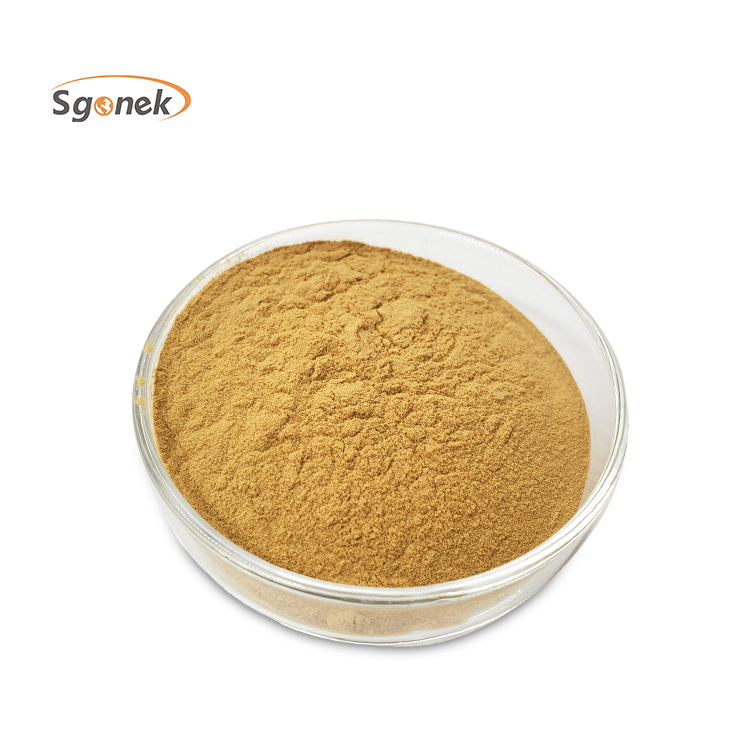
Concanavalin A Extract, often referred to in scientific contexts as ConA or sometimes colloquially associated with the term "Concanavax" in specific historical or regional marketing materials, is a prominent lectin isolated from the jack bean (*Canavalia ensiformis*). It is crucial to clarify that there is no single standard chemical entity known strictly as "Concanavax Extract" with a unique molecular formula or CAS number in the manner of small synthetic molecules. Instead, it represents a purified protein mixture where the active component is Concanavalin A (ConA). The primary protein, Concanavalin A, has an approximate molecular weight of 26 kDa per subunit and exists as a tetramer in solution, with a total molecular mass around 104 kDa. It does not possess a simple elemental molecular formula like organic compounds but consists of amino acid chains containing approximately 237 residues per subunit. The CAS number for Concanavalin A is widely recognized as 9008-59-9.
This glycoprotein exhibits high specificity for binding to mannose and glucose residues on cell surface glycoconjugates. Its biological activity is calcium and manganese dependent, which facilitates its role as a potent mitogen. In research applications, ConA is extensively utilized to stimulate T-lymphocyte proliferation, making it a standard tool in immunology for assessing immune function and T-cell responsiveness. Furthermore, due to its ability to agglutinate red blood cells, it serves as a valuable reagent in hemagglutination assays for studying carbohydrate-protein interactions. In biotechnology, ConA is frequently employed for the affinity purification of glycoproteins; by attaching ConA to chromatography matrices, researchers can selectively isolate glycosylated proteins from complex mixtures. Additionally, it plays a significant role in cell biology studies regarding membrane dynamics, endocytosis, and cell adhesion mechanisms. While not a vaccine itself despite potential naming confusion with "vax," its interaction with immune cells makes it relevant in vaccine adjuvant research and understanding host-pathogen interactions involving carbohydrate moieties. Overall, Concanavalin A remains an indispensable reagent in biochemical and immunological laboratories worldwide for probing cellular recognition processes.





 (All Rights Reserved)