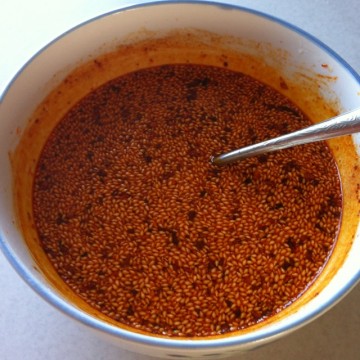
PRODUCT DETAIL of chilli seeds oil
|
Product name
|
chilli seeds oil,hot pepper seeds oil,chili oil
|
|
Specification
|
pellucid liquid,no impurity, no sediment,no coloring agents, no pesticides
|
|
Raw material
|
Chilli seeds
|
|
Acid value
|
<3
|
|
Benzopyrene
|
<2
|
|
Packaging
|
180KG/drum or others
|
PRODUCT SUPERIORITY of chilli seeds oil
1.Raw material is 100% chilli seeds,no any coloring agents
2.By Physical squeeze,not chemical extraction
3.Stansard:acid<3,benzopyrene<2
4.There is CIQ,it can export to any countries
PAYMENT&SHIPPMENT DETAILS of chilli seeds oil
Payment terms:
a) 30% deposit T/T after sign the contract. The balance will be paid against the fax of
the B/L copy.
b) Irrevocable L/C at sight.
Price terms: FOB, CFR and CIF.
Port of shipment: Tianjin port, China.
Delivery time: within 30days after receiving the prepayment.
*The following content is generated by AI and is for reference only.
Chili seeds oil, often marketed as hot chili seed oil or simply chili oil, is a versatile culinary and industrial product derived from the extraction of oils found within chili pepper seeds. Unlike standard chili oil which may contain suspended solids or capsaicin-rich fruit flesh, this specific variant focuses on the lipid fraction extracted directly from the seeds, though commercial products frequently blend seed oil with infused capsaicinoids to achieve desired heat levels. It is important to note that "chilli seeds oil" is not a single chemical compound but a complex mixture of triglycerides, primarily composed of linoleic acid (C18:2), oleic acid (C18:1), and palmitic acid. Consequently, it does not possess a single molecular formula or a unique CAS number in the strict sense used for pure substances. The base seed oil typically carries a CAS registry number around 8001-25-4 or similar variations depending on the specific botanical source, while the active spicy component, capsaicin, has its own distinct CAS number (404-86-4).
The primary application of chili seeds oil lies in the food industry, where it serves as a high-quality cooking medium with a high smoke point and a rich, nutty flavor profile enhanced by varying degrees of spiciness. Chefs utilize it for stir-frying, sautéing, and dressing salads to impart both texture and heat without the bitterness sometimes associated with overcooked spices. Beyond gastronomy, the oil finds utility in the cosmetic sector due to its antioxidant properties and potential for stimulating blood circulation when applied topically in controlled formulations. In industrial contexts, it acts as a natural lubricant or a precursor for biofuels, leveraging its fatty acid composition. Furthermore, the extract is valued in pharmaceutical research for its analgesic and anti-inflammatory effects, attributed to the presence of capsaicin derivatives. As a global commodity, this product bridges traditional cuisine with modern functional applications, offering a sustainable alternative to synthetic flavorings and heating agents. Its versatility ensures its continued relevance across diverse markets ranging from artisanal food production to advanced material science.