Product Description
| Bromfenac sodium Chemical Properties |
| Melting point | 285 ºC |
| storage temp. | 2-8°C |
| solubility | H2O: ≥5mg/mL |
| form | powder |
| color | faint yellow to dark yellow |
| InChIKey | HZFGMQJYAFHESD-UHFFFAOYSA-M |
| CAS DataBase Reference | 91714-93-1 |
AI Product Description
*The following content is generated by AI and is for reference only.
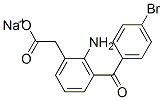
Bromfenac Sodium is a potent non-steroidal anti-inflammatory drug (NSAID) belonging to the fenamate class, widely recognized for its rapid onset of action and high efficacy in managing ocular inflammation. Chemically identified by the CAS number 132548-76-0, this compound serves as the sodium salt of bromfenac, designed to enhance water solubility and bioavailability compared to its acid counterpart. Its molecular formula is C13H9BrNNaO3, reflecting a structure that includes a bromophenyl group attached to a phenylacetic acid backbone with an amide linkage, which is crucial for its specific interaction with cyclooxygenase enzymes.
The primary clinical application of Bromfenac Sodium is the treatment of postoperative pain and inflammation following cataract surgery. It is frequently administered as topical ophthalmic solutions or suspensions to reduce pain, improve visual recovery, and prevent cystoid macular edema. Unlike some other NSAIDs, it demonstrates significant potency at low concentrations, allowing for effective therapeutic outcomes with minimal dosing frequency. The drug works by inhibiting the synthesis of prostaglandins, lipid compounds that mediate pain, fever, and inflammation. By blocking both COX-1 and COX-2 isoforms, albeit with varying selectivity, it effectively dampens the inflammatory cascade without the systemic side effects often associated with oral NSAIDs.
Beyond ophthalmology, research has explored its potential in other areas of pain management, though regulatory approvals currently focus on eye care. Safety profiles indicate that while generally well-tolerated, patients may experience transient stinging, burning, or blurred vision upon administration. Rare but serious adverse events include corneal melting or perforation, particularly in patients with pre-existing dry eye conditions or those taking multiple topical medications. Consequently, careful patient screening and monitoring are essential during therapy. As a versatile pharmaceutical agent, Bromfenac Sodium remains a cornerstone in modern ophthalmic practice, offering a reliable solution for controlling inflammation and ensuring optimal surgical outcomes in cataract procedures worldwide. Its continued use underscores the importance of targeted NSAID therapies in specialized medical fields.











 (All Rights Reserved)