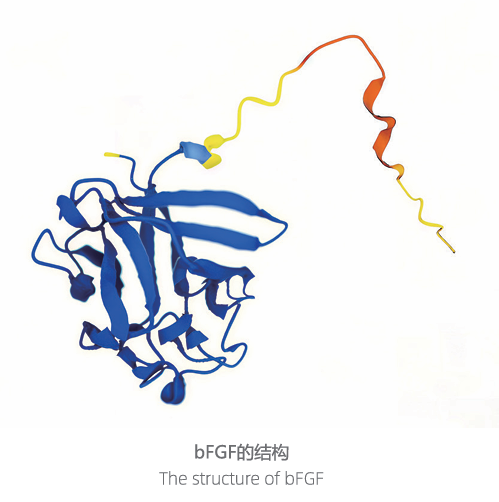
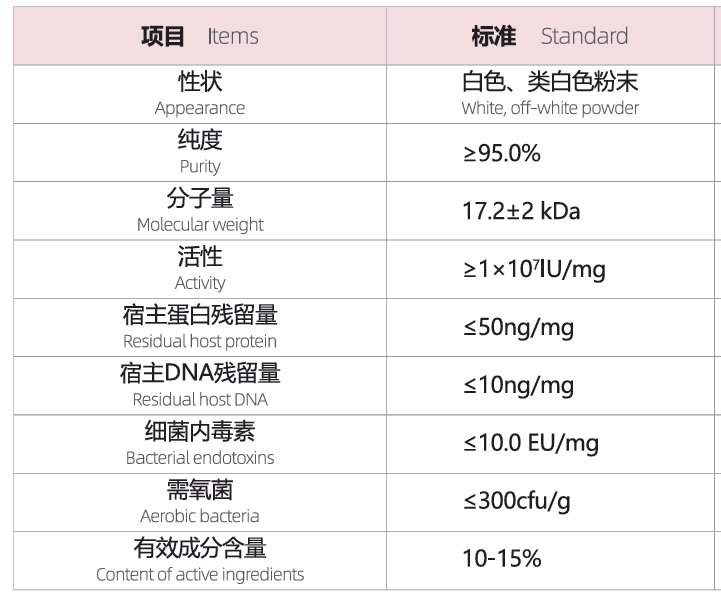
Recombinant Human Basic Fibroblast Growth Factor can promote the proliferation of most cells, and can be used as a component added to cell culture media.
Cell lines recommended: pluripotent stem cell, mesenchymal stem cell and muscle stem cell;
Hybridomas used for antibody production
Vero cells, BHK cells, diploid cells and the like used for production of virions, etc.
*The following content is generated by AI and is for reference only.
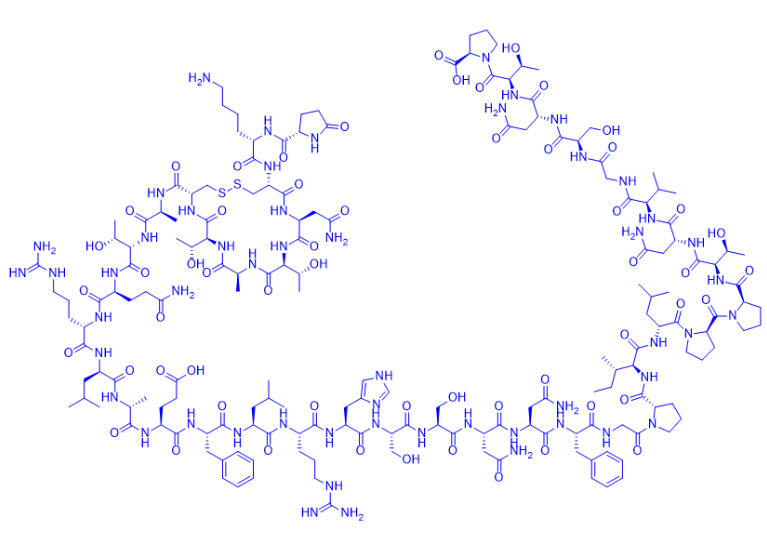
Basic Fibroblast Growth Factor, commonly abbreviated as bFGF or FGF2, is a potent polypeptide belonging to the fibroblast growth factor family. It plays a critical role in various biological processes, including cell proliferation, differentiation, migration, and angiogenesis. The molecular formula of recombinant human bFGF is typically represented as C156H248N48O50S4 for its monomeric form, though exact stoichiometry can vary slightly depending on specific post-translational modifications and purification methods used by different manufacturers. Its CAS number is 137985-32-7, which serves as a unique identifier for regulatory and chemical cataloging purposes globally.
bFGF functions by binding with high affinity to heparin and specific tyrosine kinase receptors on the cell surface, triggering intracellular signaling cascades that promote tissue repair and regeneration. Due to these properties, it is extensively utilized in biomedical research and clinical applications. In vitro, researchers employ bFGF to maintain the pluripotency of embryonic stem cells and to induce the differentiation of mesenchymal stem cells into specialized lineages such as neurons or endothelial cells. In regenerative medicine, it is investigated for treating chronic wounds, burns, and ischemic tissues by stimulating new blood vessel formation and accelerating epithelialization. Furthermore, the cosmetic industry incorporates bFGF into anti-aging formulations to enhance skin elasticity and reduce wrinkle depth by promoting collagen synthesis and cellular turnover.
Despite its therapeutic potential, bFGF requires careful handling due to its instability at neutral pH and susceptibility to proteolytic degradation. It is usually supplied lyophilized and must be reconstituted under strict sterile conditions. While not yet a standard first-line therapy for all indications, ongoing clinical trials continue to explore its efficacy in neurological disorders, cardiovascular diseases, and orthopedic repairs. As a fundamental growth factor, bFGF remains an indispensable tool for advancing our understanding of developmental biology and developing novel regenerative therapies. Its versatility underscores its significance in both basic science and translational medicine, bridging the gap between cellular mechanisms and practical medical interventions.