Benz[g]indolo[2,3-b]carbazole, 7,9-dihydro-7-phenyl
OLED intermediate, intermediates, 1800022-02-9
We specialize in the production of this type of intermediates and can customize them according to customers' specified specifications.
*The following content is generated by AI and is for reference only.
Benz[g]indolo[2,3-b]carbazole, 7,9-dihydro-7-phenyl is a sophisticated polycyclic organic compound belonging to the broader class of carbazole derivatives. Its molecular formula is C25H18N2, and it carries the unique CAS Registry Number 100486-76-2. This molecule features a complex fused-ring architecture comprising an indole unit fused with a carbazole core, further substituted with a phenyl group at the 7-position and reduced hydrogen atoms at positions 7 and 9. The structural integrity of this compound provides significant stability while maintaining specific electronic properties essential for advanced material science applications.
The primary utility of Benz[g]indolo[2,3-b]carbazole, 7,9-dihydro-7-phenyl lies within the field of organic electronics and optoelectronics. Due to its extended conjugated pi-system, this molecule exhibits excellent charge transport capabilities, making it a promising candidate for use as a hole-transporting material (HTM) or an emitter in organic light-emitting diodes (OLEDs). Researchers utilize such compounds to enhance the efficiency and lifespan of display technologies and solid-state lighting solutions. The presence of the phenyl substituent often tunes the energy levels and solubility characteristics, facilitating better film formation during device fabrication processes like spin-coating or vacuum deposition.
Beyond display applications, derivatives of this structure are investigated for their potential in organic photovoltaics (OPVs) and chemical sensors. The specific arrangement of nitrogen atoms within the heterocyclic rings allows for versatile coordination chemistry, which can be exploited in developing new sensing mechanisms for environmental monitoring or biological detection. Furthermore, the rigid planar nature of the core skeleton contributes to strong intermolecular interactions, influencing the morphological stability of thin films under thermal stress. While currently categorized largely as a research-grade reagent, ongoing studies aim to optimize its synthesis and performance metrics for commercial scalability. As the demand for high-performance organic semiconductors grows, compounds like Benz[g]indolo[2,3-b]carbazole, 7,9-dihydro-7-phenyl represent critical building blocks in the next generation of flexible and efficient electronic devices.

![Benz[g]indolo[2,3-b]carbazole, 7,9-dihydro-7-phenyl](https://eimg.pharmasources.com/image/20250427/nXfIqLIqyKMSIW3UWW3AjVtER8Yx6rFWeVxOwgSh.jpg)




 (All Rights Reserved)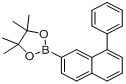





![Diethyl-2-acetamido-2-(7-chloro-5-(2-fluorophenyl)-3H- benzo[e][1,4]diazepin-2-yl)malonate](https://eimg.pharmasources.com/image/20240603/kCK1tVKXvO7mdpLTBNii5x61NUulXBiqHBf6clcn.png)

