GMP approved factory,stable supplying, competitive price
*The following content is generated by AI and is for reference only.
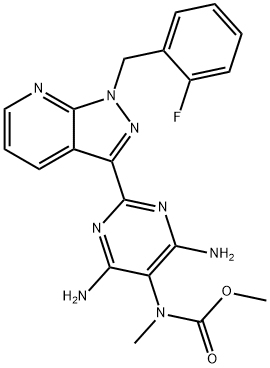
Apixaban, often referenced in clinical contexts as Eliquis, is a potent and selective oral anticoagulant belonging to the class of direct Factor Xa inhibitors. While "INTS" typically denotes specific internal numbering systems or batch identifiers within pharmaceutical manufacturing rather than a distinct chemical variant, the core molecule remains Apixaban. Its molecular formula is C17H20ClN5O4, with a corresponding CAS Registry Number of 653980-30-6. This compound features a complex structure containing a pyrazole ring, a chlorophenyl group, and an oxadiazole moiety, which collectively enable high affinity binding to the active site of Factor Xa.
The primary therapeutic application of Apixaban lies in the prevention and treatment of thromboembolic disorders. It is widely prescribed for reducing the risk of stroke and systemic embolism in patients with non-valvular atrial fibrillation. Furthermore, it serves as a critical intervention following hip or knee replacement surgeries to prevent deep vein thrombosis (DVT) and pulmonary embolism (PE). Unlike older anticoagulants such as warfarin, Apixaban offers a predictable pharmacokinetic profile that generally does not require routine monitoring of coagulation parameters like INR. It acts by directly inhibiting free and clot-bound Factor Xa, thereby blocking the conversion of prothrombin to thrombin and interrupting the coagulation cascade at a pivotal point.
Administration is convenient, typically involving twice-daily oral dosing without the need for food adjustments in most cases. The drug exhibits rapid absorption, reaching peak plasma concentrations within three hours. Metabolism occurs primarily via cytochrome P450 enzymes, specifically CYP3A4/5, with minor contributions from other pathways. Renal excretion accounts for a significant portion of elimination, necessitating dose adjustments in patients with severe renal impairment. Safety profiles indicate a favorable balance between efficacy and bleeding risk compared to vitamin K antagonists, though caution remains essential regarding concurrent use with antiplatelet agents. As a cornerstone of modern antithrombotic therapy, Apixaban continues to improve patient outcomes in managing cardiovascular risks globally.
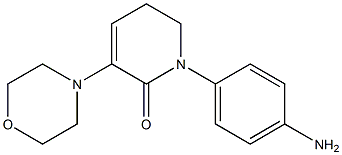



 (All Rights Reserved)
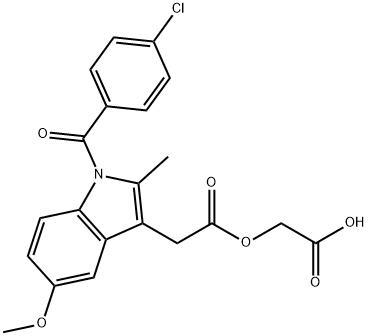
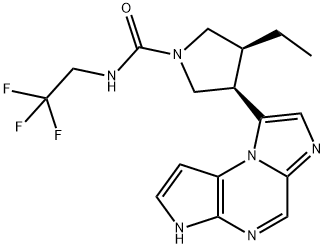

![4-[[[[6-[(Diethylamino)methyl]-2-naphthalenylmethoxy]carbonyllaminolbenzoic acid](https://eimg.pharmasources.com/image/20241206/xJCFsdgfMrHzqjtgeOixhGQHgVbKi7kAcoEqemzE.jpg)