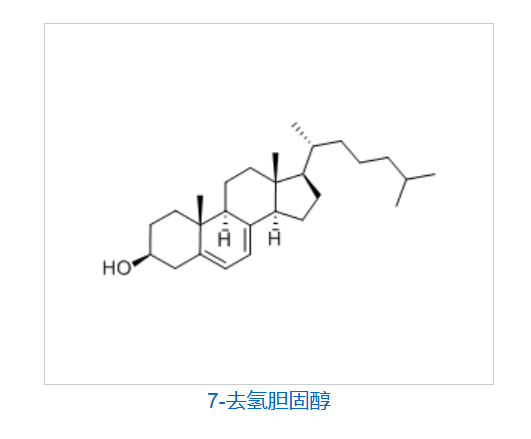
7-去氢胆固醇化学性质熔点:148-152°C(lit.)沸点:451.27°C(roughestimate)比旋光度:-116º(C=1,CHCL3)密度:0.9717(roughestimate)折射率:1.5100(estimate)储存条件:-20°C溶解度:Chloroform(Sparingly),DMSO(Slightly,Heated,Sonicated),EthylChemicalbookAcetate(Slightly)酸度系数(pKa):14.91±0.70(Predicted)形态:Solid颜色:WhitetoYellow生物来源:synthetic旋光性(opticalactivity):[α]20/D-115±8°,c=1%inchloroform水溶解性:InsolubleMerck:13,2887BRN:2224615稳定性:LightSensitive
*The following content is generated by AI and is for reference only.
7-Dehydrocholesterol, chemically known as 5,7-cholestadien-3β-ol, is a vital sterol and a crucial precursor in the biosynthesis of vitamin D3. With the molecular formula C27H44O and a CAS registry number of 610-19-9, this compound plays an indispensable role in both biological systems and industrial applications. Structurally, it features a steroid backbone with double bonds at positions 5 and 7, distinguishing it from cholesterol by its unique photochemical reactivity.
The most significant function of 7-dehydrocholesterol occurs within the skin of humans and other animals. Upon exposure to ultraviolet B (UVB) radiation from sunlight, the molecule undergoes a photochemical reaction that cleaves the B-ring, converting it into pre-vitamin D3, which subsequently isomerizes into active vitamin D3. This process is essential for calcium homeostasis, bone health, and immune system regulation. Consequently, deficiencies in this conversion pathway can lead to severe conditions such as rickets or osteomalacia. Beyond human physiology, this compound is widely utilized in scientific research to study vitamin D metabolism, lipid biology, and photobiology. Researchers often employ it as a standard reference material or a substrate in enzymatic assays to investigate the mechanisms of photoconversion and metabolic pathways.
In the pharmaceutical and cosmetic industries, 7-dehydrocholesterol serves as a key raw material for the synthesis of high-purity vitamin D supplements. It is also investigated for potential therapeutic applications in treating genetic disorders related to cholesterol synthesis, such as Smith-Lemli-Opitz syndrome, where patients exhibit elevated levels of this precursor due to enzyme deficiencies. Furthermore, its presence in various dietary sources and its stability make it a valuable tool for nutritional studies. While naturally occurring in animal tissues like liver, kidney, and skin, commercial grades are often synthesized or extracted to ensure purity for medical use. As a fundamental building block of life, understanding and utilizing 7-dehydrocholesterol remains critical for advancing public health strategies regarding vitamin D deficiency and skeletal development worldwide. Its dual nature as both a structural lipid and a photosensitive pro-hormone underscores its unique importance in biochemistry.


![6,8-Dioxo-5,7-diazaspiro[3.4]octane-2-carboxylic acid](https://eimg.pharmasources.com/image/product/20250403/02effeb5a7639bc84ff1f3add3c0c64fjpg)
![8-Oxa-1,3-diazaspiro[4.5]decane-2,4-dione](https://eimg.pharmasources.com/image/product/20250403/60fa7223d5a34f24138486ceea0ffb15jpg)
![8,16-Diazadispiro[6.1.6.2]heptadecan-17-one](https://eimg.pharmasources.com/image/product/20250403/ca91cba8b87e53fc879f8d8764873a40jpg)



 (All Rights Reserved)