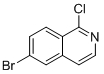
6-Bromo-1-chloroisoquinoline
OLED intermediate, intermediates, 205055-63-6
We specialize in the production of this type of intermediates and can customize them according to customers' specified specifications.
*The following content is generated by AI and is for reference only.
6-Bromo-1-chloroisoquinoline is a versatile heterocyclic building block widely utilized in the pharmaceutical and agrochemical industries for the synthesis of complex bioactive molecules. With the molecular formula C9H5BrClN, this compound features an isoquinoline core substituted with a bromine atom at the sixth position and a chlorine atom at the first position. Its Chemical Abstracts Service (CAS) registry number is 130278-84-9. The presence of two distinct halogen substituents makes it particularly valuable for transition-metal-catalyzed cross-coupling reactions, such as Suzuki-Miyaura, Heck, and Sonogashira couplings, allowing chemists to introduce diverse functional groups with high precision.
In drug discovery research, 6-Bromo-1-chloroisoquinoline serves as a critical intermediate for constructing kinase inhibitors, antimalarial agents, and other therapeutic compounds containing isoquinoline scaffolds. The electron-withdrawing nature of the halogens activates specific ring positions for nucleophilic attack or facilitates oxidative addition in palladium catalysis, streamlining synthetic pathways. Furthermore, its stability under standard laboratory conditions ensures ease of handling and storage, making it a preferred reagent for both academic laboratories and industrial process development.
The compound finds applications in materials science as well, where it contributes to the development of luminescent organic materials and advanced electronic components due to its rigid aromatic structure and tunable electronic properties. Researchers often employ this molecule to explore structure-activity relationships (SAR) by systematically modifying the substituent patterns on the isoquinoline ring system. Its ability to undergo further functionalization without degrading the core skeleton enhances its utility in multi-step syntheses.
Safety data indicates that while generally stable, proper handling protocols should be followed to avoid contact with skin or inhalation of dust, as with most organic halides. It is typically supplied as a pale yellow to off-white crystalline solid. As the demand for novel heterocyclic drugs grows, 6-Bromo-1-chloroisoquinoline remains an essential tool for medicinal chemists aiming to accelerate the development of next-generation therapeutics. Its unique combination of reactivity and structural integrity continues to support innovation across various scientific disciplines, proving indispensable in modern chemical synthesis.





 (All Rights Reserved)






![Diethyl-2-acetamido-2-(7-chloro-5-(2-fluorophenyl)-3H- benzo[e][1,4]diazepin-2-yl)malonate](https://eimg.pharmasources.com/image/20240603/kCK1tVKXvO7mdpLTBNii5x61NUulXBiqHBf6clcn.png)