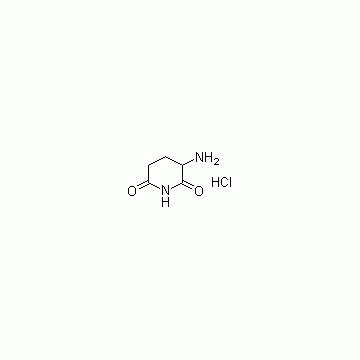
Product Description
pharmaceutical intermediates
AI Product Description
*The following content is generated by AI and is for reference only.
4-Fluoro-1,3-dioxolan-2-one, chemically identified by CAS number 58739-60-7, is a specialized organic fluorinating agent and a cyclic carbonate derivative. Its molecular formula is C3H3FO3, featuring a five-membered ring structure that incorporates two oxygen atoms at positions one and three, a carbonyl group at position two, and a fluorine substituent at the four-position. This unique structural configuration endows the compound with high reactivity, making it a valuable building block in modern synthetic chemistry and pharmaceutical research.
The primary application of 4-fluoro-1,3-dioxolan-2-one lies in its role as an electrophilic fluorinating reagent. Unlike many traditional fluorinating agents that require harsh conditions or generate significant waste, this cyclic carbonate offers a milder pathway for introducing fluorine atoms into complex molecular frameworks. It is frequently employed in the synthesis of bioactive molecules where precise fluorination is critical for optimizing pharmacokinetic properties, such as metabolic stability and membrane permeability. In medicinal chemistry, the introduction of a fluorine atom can significantly alter the biological activity of a drug candidate, often enhancing potency or reducing toxicity. Consequently, this reagent serves as a key intermediate in the development of novel agrochemicals and advanced pharmaceutical compounds.
Furthermore, the compound finds utility in materials science, particularly in the preparation of specialized polymers and functional monomers. The presence of the reactive carbonyl and fluorine groups allows for versatile chemical modifications, enabling the creation of materials with tailored physical and chemical characteristics. Researchers utilize it to synthesize fluoro-containing heterocycles, which are essential components in various high-performance applications. Despite its specialized nature, safety protocols must be strictly observed during handling due to potential irritant properties and reactivity with moisture. As the demand for efficient and selective fluorination methods grows within the chemical industry, 4-fluoro-1,3-dioxolan-2-one remains a pivotal tool for chemists aiming to advance the frontiers of molecular design and synthesis. Its efficiency and specificity continue to drive innovation across multiple scientific disciplines.






 (All Rights Reserved)
![4-[[[[6-[(Diethylamino)methyl]-2-naphthalenylmethoxy]carbonyllaminolbenzoic acid](https://eimg.pharmasources.com/image/20241206/xJCFsdgfMrHzqjtgeOixhGQHgVbKi7kAcoEqemzE.jpg)