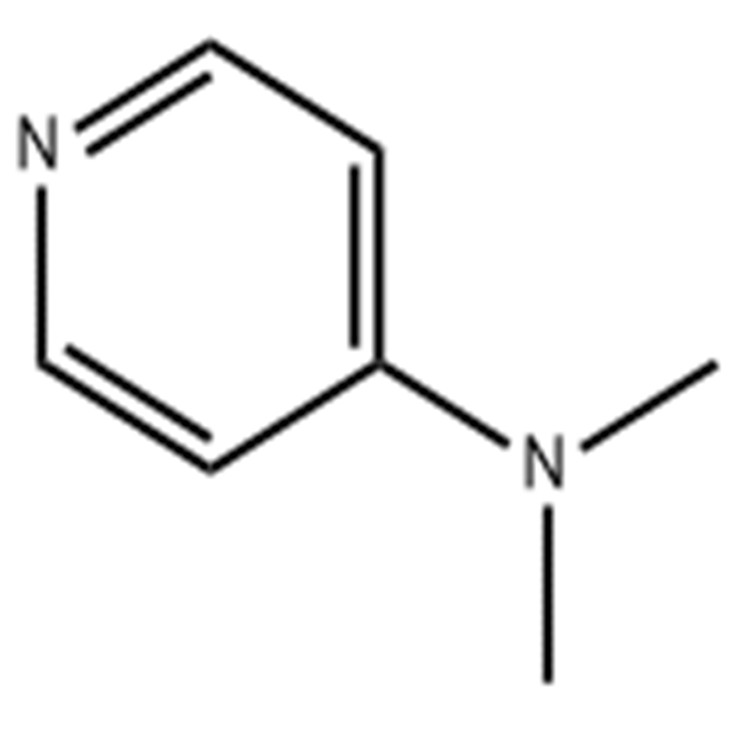
Product Name: 4-Dimethylamino pyridine
CAS number: 1122-58-3
Molecular formula: C7H10N2
Molecular weight: 122.1698
Purity (content): 99%
Property: A white or pale yellow solid with a melting point of 110-114 ℃. Strong alkalinity, soluble in water, alcohol, benzene, and other organic solvents.
Usage: This product is mainly used as a super nucleophilic acylation catalyst.
Caution: Easy to absorb water, should be sealed and stored dry.
*The following content is generated by AI and is for reference only.
4-Dimethylaminopyridine, commonly known as DMAP, is a pivotal reagent in organic synthesis and chemical manufacturing. With the molecular formula C7H10N2 and the CAS Registry Number 1122-58-3, this white to pale yellow crystalline solid stands out for its exceptional nucleophilic properties. Structurally, it consists of a pyridine ring substituted with a dimethylamino group at the para position, which significantly enhances the electron density on the ring nitrogen compared to standard pyridine. This unique electronic configuration makes DMAP a far more potent catalyst than its parent compound.
The primary application of DMAP lies in acylation reactions, where it serves as an indispensable catalyst for the conversion of alcohols and phenols into esters using acid chlorides or anhydrides. It dramatically accelerates reaction rates and improves yields under mild conditions, often allowing processes that would otherwise require harsh temperatures or prolonged times to proceed efficiently at room temperature. Beyond esterification, DMAP is widely utilized in amide bond formation, sulfonation, and phosphorylation reactions. Its ability to activate carboxylic acids makes it a cornerstone in peptide synthesis and the production of complex pharmaceutical intermediates.
In industrial settings, DMAP is essential for synthesizing high-performance polymers, agrochemicals, and fine chemicals. Its solubility in common organic solvents such as dichloromethane, tetrahydrofuran, and dimethylformamide facilitates its integration into various synthetic protocols. While highly effective, users must handle DMAP with care due to its potential toxicity and irritant nature; appropriate personal protective equipment is mandatory during handling. Despite these safety considerations, the efficiency and versatility of DMAP render it one of the most valuable tools in modern laboratory and industrial chemistry. Researchers continue to rely on this reagent for optimizing synthetic pathways, ensuring cost-effective and environmentally friendlier production methods across diverse sectors ranging from medicine to materials science. Its enduring relevance underscores its status as a fundamental building block in contemporary organic chemistry.





 (All Rights Reserved)
![8-Oxa-1,3-diazaspiro[4.5]decane-2,4-dione](https://eimg.pharmasources.com/image/product/20250403/60fa7223d5a34f24138486ceea0ffb15jpg)
![6,8-Dioxo-5,7-diazaspiro[3.4]octane-2-carboxylic acid](https://eimg.pharmasources.com/image/product/20250403/02effeb5a7639bc84ff1f3add3c0c64fjpg)
![8,16-Diazadispiro[6.1.6.2]heptadecan-17-one](https://eimg.pharmasources.com/image/product/20250403/ca91cba8b87e53fc879f8d8764873a40jpg)