Product Description
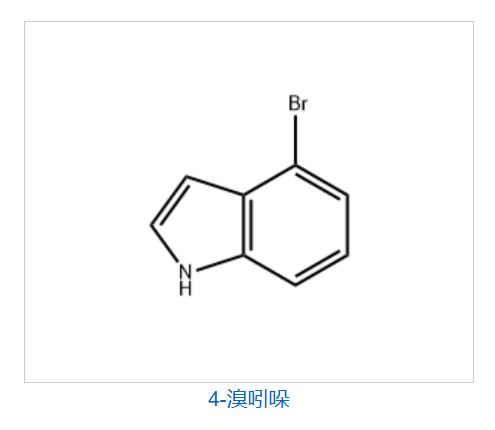
4-溴吲哚化学性质熔点:17°C沸点:283-285°C(lit.)密度:1.563g/mLat25°C(lit.)折射率:n20/D1.655(lit.)闪点:230°F储存条件:Keepindarkplace,Sealedindry,RoomTemChemicalbookperature溶解度:Chloroform(Sparingly),DMSO(Slightly)EthylAcetate形态:Oil酸度系数(pKa):16.07±0.30(Predicted)比重:1.563颜色:PaleYellowtoYellow
AI Product Description
*The following content is generated by AI and is for reference only.
4-Bromoindole is a specialized organic compound widely recognized in the fields of medicinal chemistry, agrochemicals, and materials science. With the molecular formula C8H6BrN and a molecular weight of approximately 198.04 g/mol, this heterocyclic substance serves as a critical building block for synthesizing complex nitrogen-containing structures. Its Chemical Abstracts Service (CAS) Registry Number is 3137-25-7, which uniquely identifies it in global chemical databases. Structurally, 4-bromoindole consists of an indole core substituted with a bromine atom at the fourth position, a configuration that significantly influences its reactivity compared to unsubstituted indole or other positional isomers.
The primary application of 4-bromoindole lies in its role as a versatile intermediate in cross-coupling reactions, such as Suzuki-Miyaura, Heck, and Sonogashira couplings. These reactions are indispensable for constructing biologically active scaffolds, including pharmaceutical agents used to treat cancer, inflammation, and neurological disorders. Researchers frequently utilize this compound to introduce specific functional groups into drug candidates, thereby enhancing their potency, selectivity, or metabolic stability. Beyond pharmacology, 4-bromoindole finds utility in the development of novel agrochemicals, where it acts as a precursor for pesticides and herbicides designed to improve crop yields and protect against pests.
In the realm of advanced materials, derivatives of 4-bromoindole are explored for use in organic electronics, particularly in the synthesis of conductive polymers and luminescent materials for OLED technologies. The presence of the bromine atom facilitates efficient metal-catalyzed transformations, allowing chemists to fine-tune electronic properties with high precision. Due to its sensitivity to light and moisture, proper storage under inert atmospheres is recommended to maintain purity. Overall, 4-bromoindole stands as a pivotal reagent in modern synthetic chemistry, bridging the gap between simple aromatic compounds and high-value therapeutic or functional molecules. Its continued relevance underscores the importance of halogenated heterocycles in driving innovation across scientific disciplines.


![8,16-Diazadispiro[6.1.6.2]heptadecan-17-one](https://eimg.pharmasources.com/image/product/20250403/ca91cba8b87e53fc879f8d8764873a40jpg)
![6,8-Dioxo-5,7-diazaspiro[3.4]octane-2-carboxylic acid](https://eimg.pharmasources.com/image/product/20250403/02effeb5a7639bc84ff1f3add3c0c64fjpg)
![8-Oxa-1,3-diazaspiro[4.5]decane-2,4-dione](https://eimg.pharmasources.com/image/product/20250403/60fa7223d5a34f24138486ceea0ffb15jpg)



 (All Rights Reserved)