Product Description
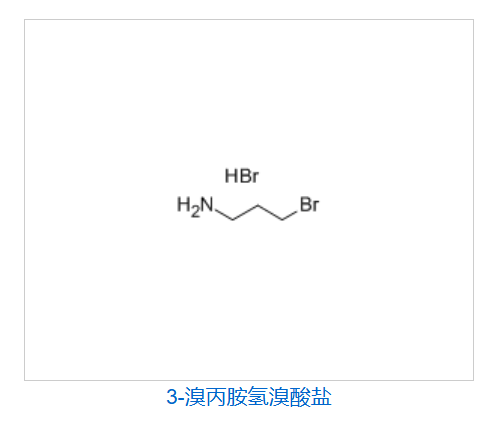
熔点:171-172°C(lit.)储存条件:Inertatmosphere,RoomTemperature形态:PowderorChunks颜色:Whitetooff-white水溶解性:Solubleinwater(50mg/ml).敏感性:HygroscopicBRN:3906418InChI:InChI=1S/C3H8BrN.BrHChemicalbook/c4-2-1-3-5;/p-3,5H2;1HInChIKey:PQIYSSSTRHVOBW-UHFFFAOYSA-NSMILES:C(CBr)CN.BrCAS数据库:5003-71-4(CASDataBaseReference)EPA化学物质信息:1-Propanamine,3-bromo-,hydrobromide(5003-71-4)
AI Product Description
*The following content is generated by AI and is for reference only.
3-Bromopropylamine hydrobromide is a vital organic intermediate widely utilized in pharmaceutical synthesis, agrochemical development, and materials science. With the chemical formula C₃H₉Br₂N and the CAS Registry Number 2618-75-5, this compound exists as a white to off-white crystalline solid at room temperature. It is essentially the dihydrobromide salt of 3-bromopropylamine, offering enhanced stability and solubility in polar solvents compared to its free amine counterpart. The molecule features a three-carbon alkyl chain terminated by a primary amine group and a reactive bromine atom, making it an ideal bifunctional reagent for nucleophilic substitution reactions.
In the pharmaceutical industry, this reagent serves as a crucial building block for constructing heterocyclic structures, particularly piperazines, pyrrolidines, and morpholines, which are common scaffolds in bioactive molecules. Its utility extends to the synthesis of various drugs targeting central nervous system disorders, cardiovascular conditions, and antimicrobial agents. The presence of the bromine moiety allows for further functionalization through cross-coupling reactions or alkylation processes, enabling chemists to introduce diverse substituents with high precision. Additionally, in agrochemical research, it is employed in the preparation of herbicides and fungicides that require specific amine-based side chains for optimal biological activity.
Safety protocols are essential when handling 3-Bromopropylamine hydrobromide due to its corrosive nature and potential irritant properties. It should be stored in a cool, dry place away from incompatible oxidizing agents and strong bases to prevent decomposition or hazardous reactions. Proper personal protective equipment, including gloves, goggles, and lab coats, must be worn during manipulation to avoid skin contact and inhalation of dust. While versatile, its application requires careful stoichiometric control to ensure reaction efficiency and product purity. As a cost-effective and readily available commodity chemical, it remains a staple in laboratory-scale syntheses and industrial manufacturing processes where reliable nitrogen-containing precursors are required. Researchers continue to explore novel applications for this compound in the development of advanced functional materials and next-generation therapeutics.


![8,16-Diazadispiro[6.1.6.2]heptadecan-17-one](https://eimg.pharmasources.com/image/product/20250403/ca91cba8b87e53fc879f8d8764873a40jpg)
![6,8-Dioxo-5,7-diazaspiro[3.4]octane-2-carboxylic acid](https://eimg.pharmasources.com/image/product/20250403/02effeb5a7639bc84ff1f3add3c0c64fjpg)
![8-Oxa-1,3-diazaspiro[4.5]decane-2,4-dione](https://eimg.pharmasources.com/image/product/20250403/60fa7223d5a34f24138486ceea0ffb15jpg)



 (All Rights Reserved)