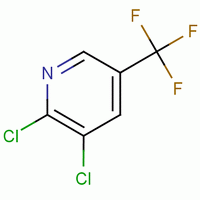
2,3-dichloro-5-(trifluoromethyl)pyridine
CAS:69045-84-7
Strong product, we can provide the best competitive price
Pls send mail to : pharmchem@ichemie.com
Contact person:Shi Qiufei
*The following content is generated by AI and is for reference only.
2,3-Dichloro-5-(trifluoromethyl)pyridine is a highly versatile halogenated heterocyclic building block widely utilized in the pharmaceutical and agrochemical industries. With the molecular formula C6H2Cl2F3N and CAS Registry Number 104893-86-7, this compound features a pyridine core substituted with two chlorine atoms at the 2 and 3 positions and a trifluoromethyl group at the 5 position. The presence of multiple electron-withdrawing groups significantly enhances the reactivity of the molecule toward nucleophilic aromatic substitution, making it an ideal precursor for synthesizing complex nitrogen-containing scaffolds.
In medicinal chemistry, this intermediate serves as a critical starting material for developing novel bioactive compounds. It is frequently employed to construct kinase inhibitors, antihypertensive agents, and other therapeutic candidates where specific pharmacophores are required. The trifluoromethyl moiety is particularly valuable as it often improves metabolic stability, lipophilicity, and binding affinity within biological targets. Similarly, in agricultural science, derivatives synthesized from this pyridine derivative contribute to the creation of modern herbicides and fungicides designed to combat crop diseases while maintaining environmental safety profiles.
The synthesis of these advanced molecules typically involves cross-coupling reactions or nucleophilic substitutions where the chlorine atoms act as leaving groups. Researchers can selectively replace one or both chlorines depending on the desired molecular architecture, allowing for precise structural tuning. Due to its stability under standard storage conditions and high purity availability from major chemical suppliers, 2,3-dichloro-5-(trifluoromethyl)pyridine remains a staple reagent in process development laboratories. Its unique electronic properties facilitate efficient reaction pathways, reducing waste and energy consumption during large-scale manufacturing. As the demand for targeted therapies and sustainable agricultural solutions grows, the role of such specialized heterocycles continues to expand, driving innovation across the chemical sciences. This compound exemplifies how strategic functionalization of simple heterocycles yields powerful tools for modern drug discovery and crop protection technologies.




 (All Rights Reserved)