Product Description
熔点:193-194°C沸点:643.0±55.0°C(Predicted)密度:1.103溶解度:DMF:5.0(MaxConc.mg/mL);10.11(MaxConc.mM)形态:Asolid酸度系数(pKa):14.27±0.70(Predicted)颜色:Whitetooff-whiteCAS数据库:80483-89-2EPA化学物质信息:6H-BenChemicalbookz[c]indeno[5,4-e]oxepin-6-one,1-[(1S,2S,3S,4S)-4-ethyl-2,3-dihydroxy-1,5-dimethylhexyl]hexadecahydro-8,9-dihydroxy-10a,12a-dimethyl-,(1R,3aS,3bS,6aS,8S,9R,10aR,10bS,12aS)-(80483-89-2)
AI Product Description
*The following content is generated by AI and is for reference only.
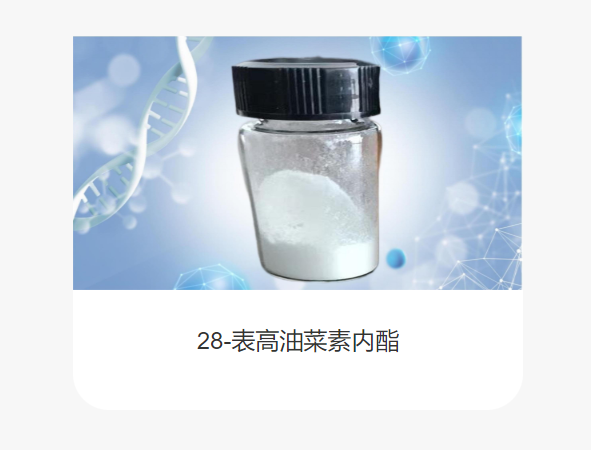
22(S),23(S)-Homobrassinolide is a highly potent synthetic analog of brassinosteroids, a class of plant steroid hormones essential for regulating growth and development. With the molecular formula C29H48O6 and CAS number 10571-60-7, this compound features an extended side chain compared to natural brassinolide, enhancing its stability and bioactivity in agricultural applications. It functions primarily by mimicking the signaling pathways of endogenous brassinosteroids, thereby promoting cell elongation, division, and differentiation across various plant species.
The primary utility of 22(S),23(S)-Homobrassinolide lies in modern agriculture and horticulture as a biostimulant. Farmers and researchers utilize it to significantly improve crop yield, enhance resistance against abiotic stresses such as drought, salinity, extreme temperatures, and heavy metal toxicity, and boost overall plant vigor. Unlike traditional fertilizers that merely supply nutrients, this hormone regulates physiological processes at the cellular level, leading to improved photosynthetic efficiency, better nutrient uptake, and accelerated flowering or fruiting cycles. Its application is particularly beneficial for cereal crops, vegetables, fruits, and ornamental plants facing environmental challenges.
Due to its high biological activity, effective doses are typically extremely low, often measured in parts per billion, making it cost-effective despite its sophisticated synthesis. The specific stereochemistry at positions 22 and 23 ensures optimal binding affinity to brassinosteroid receptors, distinguishing it from less active isomers. While naturally occurring brassinosteroids can be difficult to extract in large quantities, 22(S),23(S)-Homobrassinolide offers a reliable, lab-synthesized alternative with consistent purity and performance. Research continues to expand its potential uses in tissue culture and seed treatment protocols. As global agriculture faces increasing pressure from climate change, compounds like this play a crucial role in developing sustainable farming practices that maximize productivity while minimizing chemical inputs. Consequently, 22(S),23(S)-Homobrassinolide stands as a vital tool for ensuring food security and optimizing crop health in diverse agro-ecological zones worldwide.


![8,16-Diazadispiro[6.1.6.2]heptadecan-17-one](https://eimg.pharmasources.com/image/product/20250403/ca91cba8b87e53fc879f8d8764873a40jpg)
![8-Oxa-1,3-diazaspiro[4.5]decane-2,4-dione](https://eimg.pharmasources.com/image/product/20250403/60fa7223d5a34f24138486ceea0ffb15jpg)
![6,8-Dioxo-5,7-diazaspiro[3.4]octane-2-carboxylic acid](https://eimg.pharmasources.com/image/product/20250403/02effeb5a7639bc84ff1f3add3c0c64fjpg)



 (All Rights Reserved)