Product Description
熔点:172°C沸点:181.3℃[at101325Pa]密度:1.9061(roughestimate)蒸气压:0.001Paat25℃折射率:1.5393(estimate)储存条件:Storebelow+Chemicalbook30°C.溶解度:>500g/l形态:CrystallinePowderorCrystals颜色:WhitetolightbeigePH值:2.9(10g/l,H2O,20℃)水溶解性:>500g/L(20ºC)
AI Product Description
*The following content is generated by AI and is for reference only.
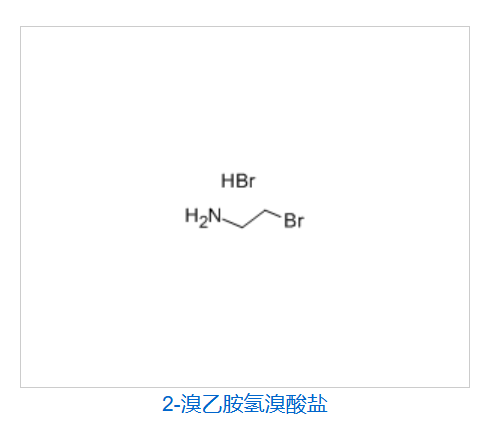
2-Bromoethylamine hydrobromide is a critical organic intermediate widely utilized in pharmaceutical research and fine chemical synthesis. With the Chemical Abstracts Service (CAS) Registry Number 593-51-1, this compound features the molecular formula C₂H₇Br₂N and a molar mass of approximately 201.89 g/mol. Structurally, it consists of an ethylamine backbone substituted with a bromine atom at the terminal position, stabilized as a hydrobromide salt to enhance stability and handling characteristics compared to its free base form. The substance typically appears as a white to off-white crystalline powder or solid, exhibiting high solubility in water and polar organic solvents like ethanol, while remaining insoluble in non-polar hydrocarbons.
The primary utility of 2-bromoethylamine hydrobromide lies in its role as a versatile alkylating agent. Due to the presence of the reactive bromo group adjacent to the amine functionality, it serves as an essential building block for constructing complex heterocyclic systems. Chemists frequently employ this reagent in the synthesis of piperazines, morpholines, and other nitrogen-containing rings that are foundational to numerous bioactive molecules. In the pharmaceutical industry, derivatives synthesized from this precursor often exhibit significant biological activity, including potential applications as antihypertensive agents, anti-inflammatory drugs, and central nervous system modulators. Furthermore, it is instrumental in developing ligands for metal coordination chemistry and functionalizing polymers to introduce specific amine functionalities.
Safety protocols are paramount when handling this material, as it acts as a corrosive irritant to skin, eyes, and respiratory tract tissues. Proper personal protective equipment, including gloves, goggles, and lab coats, is mandatory during manipulation. It should be stored in a cool, dry, well-ventilated area away from incompatible bases and oxidizers to prevent degradation or hazardous reactions. While highly effective for synthetic pathways, strict adherence to environmental regulations regarding halogenated waste disposal is required. Overall, 2-bromoethylamine hydrobromide remains an indispensable commodity in modern organic synthesis laboratories, bridging the gap between simple precursors and advanced therapeutic candidates through its unique reactivity profile.



![8,16-Diazadispiro[6.1.6.2]heptadecan-17-one](https://eimg.pharmasources.com/image/product/20250403/ca91cba8b87e53fc879f8d8764873a40jpg)
![6,8-Dioxo-5,7-diazaspiro[3.4]octane-2-carboxylic acid](https://eimg.pharmasources.com/image/product/20250403/02effeb5a7639bc84ff1f3add3c0c64fjpg)
![8-Oxa-1,3-diazaspiro[4.5]decane-2,4-dione](https://eimg.pharmasources.com/image/product/20250403/60fa7223d5a34f24138486ceea0ffb15jpg)



 (All Rights Reserved)