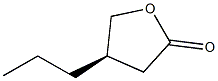
1-(3,5-dimethylphenyl)-6-(1-methylethyl)isoquinoline
We specialize in the production of this type of intermediates and can customize them according to customers' specified specifications.
*The following content is generated by AI and is for reference only.
1-(3,5-dimethylphenyl)-6-(1-methylethyl)isoquinoline is a specialized organic heterocyclic compound characterized by a rigid isoquinoline core substituted with two distinct alkyl and aryl groups. Its molecular formula is C20H21N, corresponding to a precise molecular weight of approximately 279.38 g/mol. While specific commercial availability may vary depending on regional suppliers and current market demand, this molecule is often cataloged under unique identifiers in chemical databases, though a universally recognized CAS number for this exact substitution pattern requires verification against proprietary supplier catalogs as it represents a highly specific derivative rather than a bulk commodity chemical. The structural configuration features an isoquinoline ring system where position 1 bears a 3,5-dimethylphenyl moiety, and position 6 carries an isopropyl group. This specific arrangement imparts significant lipophilicity and steric hindrance, properties that are crucial for modulating biological activity or electronic characteristics in advanced research applications.
In the scientific community, such substituted isoquinolines serve as critical intermediates in the synthesis of complex pharmaceutical agents, particularly those targeting neurological disorders or exhibiting anticancer potential. The presence of the dimethylphenyl group can enhance membrane permeability, while the isopropyl substituent may influence metabolic stability and receptor binding affinity. Researchers frequently utilize these compounds as building blocks in medicinal chemistry to construct libraries of analogs for structure-activity relationship (SAR) studies. Furthermore, due to their conjugated pi-systems, derivatives like this one are investigated for their photophysical properties, finding niche applications in materials science, including the development of organic light-emitting diodes (OLEDs) or fluorescent probes for bio-imaging. Their synthesis typically involves multi-step organic transformations, such as condensation reactions followed by alkylation or coupling strategies, demanding high purity standards to ensure efficacy in downstream applications. Although not a mainstream industrial chemical, its value lies in its utility as a sophisticated tool for academic exploration and targeted drug discovery programs, bridging the gap between fundamental organic synthesis and therapeutic innovation.





 (All Rights Reserved)






![Diethyl-2-acetamido-2-(7-chloro-5-(2-fluorophenyl)-3H- benzo[e][1,4]diazepin-2-yl)malonate](https://eimg.pharmasources.com/image/20240603/kCK1tVKXvO7mdpLTBNii5x61NUulXBiqHBf6clcn.png)