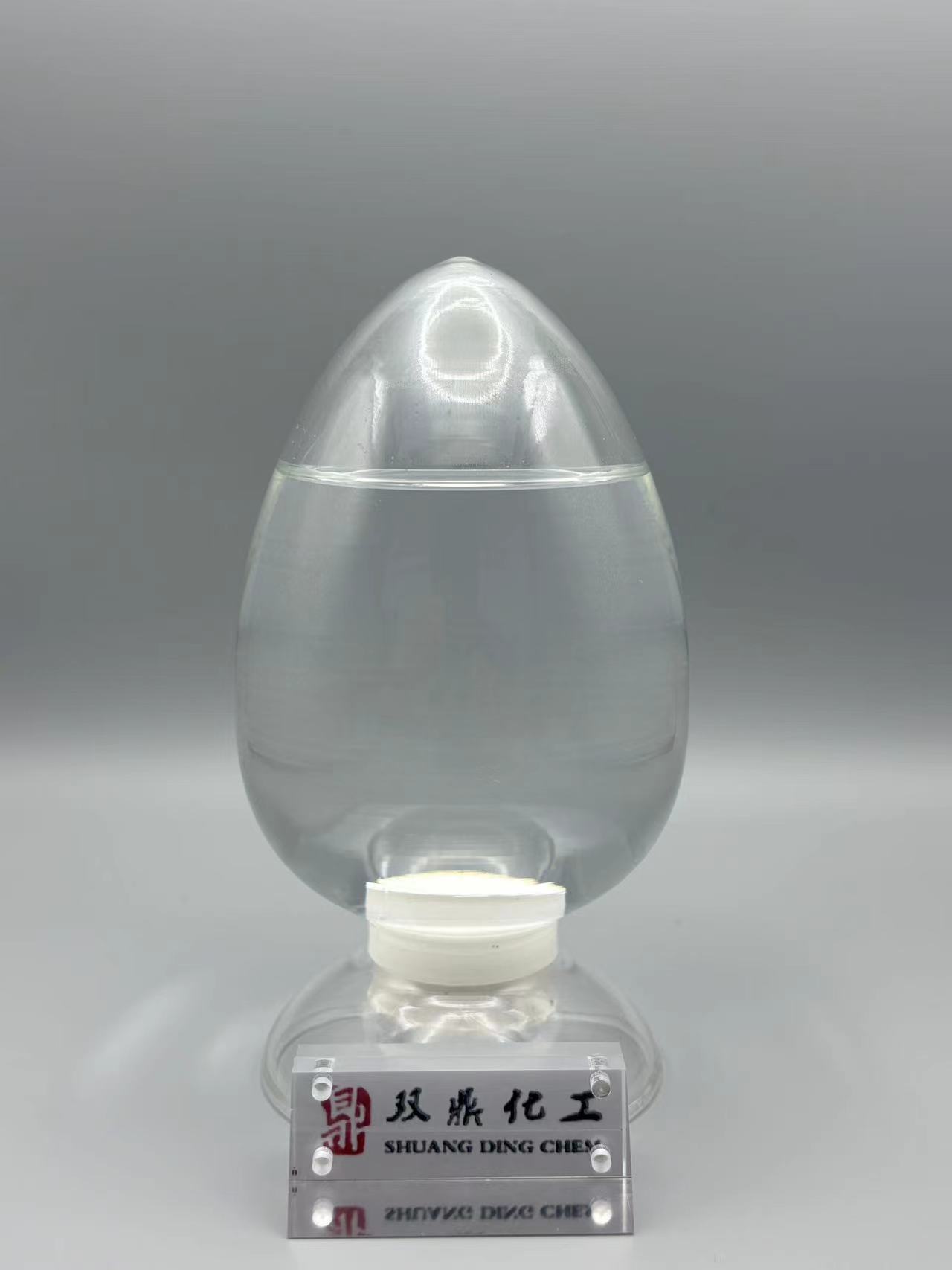
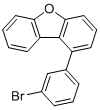
1-(3-Bromophenyl)dibenzofuran
OLED intermediate, intermediates, 2229864-78-0
We specialize in the production of this type of intermediates and can customize them according to customers' specified specifications.
*The following content is generated by AI and is for reference only.
1-(3-Bromophenyl)dibenzofuran is a specialized organic compound widely recognized in the fields of materials science, medicinal chemistry, and advanced organic synthesis. With the molecular formula C18H11BrO and a precise CAS registry number of 104597-58-2, this molecule serves as a critical intermediate for constructing complex heterocyclic architectures. Structurally, it features a dibenzofuran core substituted at the first position with a bromophenyl group, creating a rigid, planar framework that facilitates strong pi-stacking interactions and enhances thermal stability.
The primary utility of 1-(3-Bromophenyl)dibenzofuran lies in its role as a building block for the development of organic light-emitting diodes (OLEDs) and organic field-effect transistors (OFETs). The presence of the bromine atom provides a versatile handle for palladium-catalyzed cross-coupling reactions, such as Suzuki-Miyaura, Stille, or Buchwald-Hartwig couplings. These transformations allow chemists to attach various functional groups, thereby fine-tuning the electronic properties, energy levels, and solubility of the final material. In the realm of OLED technology, derivatives synthesized from this precursor are often employed as host materials or emissive dopants due to their high glass transition temperatures and excellent charge transport capabilities.
Furthermore, this compound finds applications in the pharmaceutical industry as a scaffold for designing novel bioactive agents. Its unique structural rigidity can influence the binding affinity of drug candidates to specific biological targets, potentially leading to improved therapeutic efficacy. Researchers also utilize it in the study of structure-property relationships within conjugated polymers. Despite its niche status, the demand for high-purity 1-(3-Bromophenyl)dibenzofuran continues to grow alongside advancements in flexible electronics and next-generation display technologies. Handling requires standard laboratory safety precautions, as with most halogenated aromatic compounds, ensuring proper ventilation and protection against skin contact. Overall, it remains an indispensable reagent for scientists pushing the boundaries of functional organic materials.





 (All Rights Reserved)






![Diethyl-2-acetamido-2-(7-chloro-5-(2-fluorophenyl)-3H- benzo[e][1,4]diazepin-2-yl)malonate](https://eimg.pharmasources.com/image/20240603/kCK1tVKXvO7mdpLTBNii5x61NUulXBiqHBf6clcn.png)