
In many skin care products, there is "peptide" ingredients, most businesses will seize this point to vigorously "myth" their products. Therefore, when people see "peptide", they will naturally define products containing such ingredients as "high-end".
Although the "high-end" image of peptide is deeply rooted in many fairy hearts, most people only know that it is "a very powerful ingredient". Today we are going to clarify the peptide composition and uncover the mystery of this "high-end" ingredient.
Peptides in skin care products
First of all, how does the peptide used in skin care products work?
In the biological world, peptides are everywhere, from the smallest two amino acid oligopeptides to proteins with molecular weight of several million, all belong to this family. The peptides used in skin care products are mainly small molecular oligopeptides.
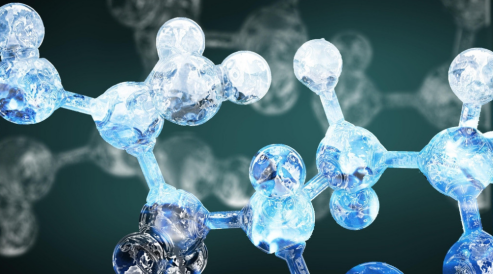
According to the standard, small oligopeptides act as messengers between cells. When a cell senses a change in its environment, it sends these letters to other cells to make a response.
But I think this is different from the letter we usually say, because the oligopeptide letter released by the cell is more like a key. You can directly find the keyhole (receptor) and start the corresponding function without opening it.

In this way, the communication efficiency is very high, and the wrong message will not be conveyed. Each key's signature code is hidden in its own amino acid sequence, which can be unlocked by targeting the corresponding receptor on the cell surface

Name of amino acids and corresponding codes
Common peptides in skin care products
The wrinkled Matrixyl
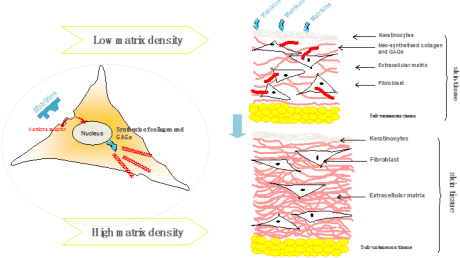
Skin intercellular matrix (ECM) is rich in collagen, glycosaminoglycan and other water locking macromolecules, which is the key to skin fullness. When the collagen is degraded, the water-soluble peptide matrikines will be released. Fibroblasts in the basal layer of the epidermis have a "keyhole" reception, similar to EGFR (epidermal growth factor receptor). After opening, they will start to synthesize new collagen.
According to this mechanism, Dr. Karl linter of sesdema company, France, imitated Matrixyl. Its active ingredient is palmitoyl pentapeptide-3, which simulates this signal to activate the function of fibroblasts, replenish collagen, and make skin plump and wrinkle free.
Botulinum like peptide family against facial expression lines
1. Botulinum.
The most traditional way to deal with facial expression patterns is to inject botulinum toxin. Botulinum toxin itself is a kind of polypeptide, which can block the transmission of nerve impulse to muscle by blocking the release of acetylcholine from presynaptic membrane between nerve muscle joints, resulting in muscle failure.
However, there are certain risks in the operation, so the medical cosmetic injection must be operated by professional doctors of regular institutions, otherwise if you are not careful, you will be labeled "smile like skin, smile like meat", and you can only cry silently when you cry.


























 (All Rights Reserved)