
No matter it is in the pharmaceutical industry, among physicians or plain citizens, the traditional Chinese medicine can always derive numerous topics.
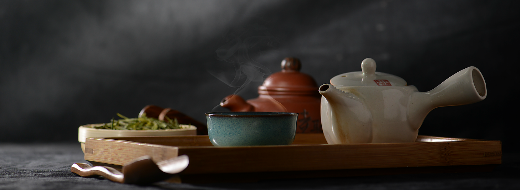
If we liken the traditional Chinese medicine as an aromatic cup of tea, the substance emanated from tea leaves equals to its soul; it expands smoothly in the water, like a girl holding fine silk in her hands dances trippingly around you.
Modern Chinese medicine tries to lock such a soul in capsules, seal them in tablets, and twine them in granules, and then deliver them into people's body and drive away their illness.
Before locking, sealing and twining, it is critical to concentrate such a soul.
In this way, concentration is indeed an important process, which relates to medicine molding, preparation quality and subsequent processes, and is deemed as one of the key soul techniques in modern Chinese pharmaceutical manufacturing and production.
However, it is not a simple process to condense such a soul; at present, technological difficulties involve problems of descaling and heat transfer augmentation.
Concentration is like doing magic; then, which factor plays a key role in its automation, continuity, production augmentation, energy conservation and consumption reduction? The answer is equipment.
The main purpose of soul concentration is to remove its boarding carrier --- water or solvent, and seal the soul in its original container.
However, there are a variety of ways for concentration; based on steam use frequency, it can be divided into single-effect concentration and multiple-effect concentration. Before this, let's learn about what primary steam and secondary steam are.
The so-called primary steam refers to steam directly used for heating, while secondary steam refers to steam gasified out of solution.
Single-effect concentration requires the use of steam for only one time, and multiple-effect concentration involves using secondary steam as the heating steam for another evaporator.
Two critical conditions shall be satisfied before concentration: the first one is to provide continual heat energy to boil the solution; the second one is to remove solvent vapor generated in the concentration process.
The so-called boiling refers to a process when the boiling point is reached, a lot of steam will be rapidly generated and escape from the solution, and the soul loses its carrier. This process can also be deemed as an evaporation process.
Some souls are fit for atmospheric concentration, while some others for vacuum concentration. It is like different collection ways are targeted for different souls; otherwise, what you have collected might not be the true soul, or might be a demon.
Characteristics for atmospheric concentration: such a soul performs relatively well in heat resistance, is not easy to be destroyed, and can bear high temperature for a long time.
Characteristics for vacuum concentration: Some souls are not fond of high temperature, and intend to lose temper under a high temperature and suffer self-harm; then, an atmospheric pressure reduction can decrease the boiling point, increase temperature difference, and reduce required heat transfer area. Boiling point depression avails the use of low-pressure steam or waste steam to prevent the denaturation or decomposition of heat sensitive materials; a low system temperature can reduce heat loss. Nevertheless, as the boiling point decreases, the solution viscosity will increase, which can result in the reduction of the boiling heat transfer coefficient and the formation of vacuum system in decompression; then it needs to improve equipment configuration and augment power consumption.
Intermittent concentration, continuous concentration, circular concentration, and single-way concentration can be used on different occasions of Chinese herbal extracts; therefore, different concentration ways should be adopted for different souls.
Intermittent concentration: it refers to the o...

























 (All Rights Reserved)