
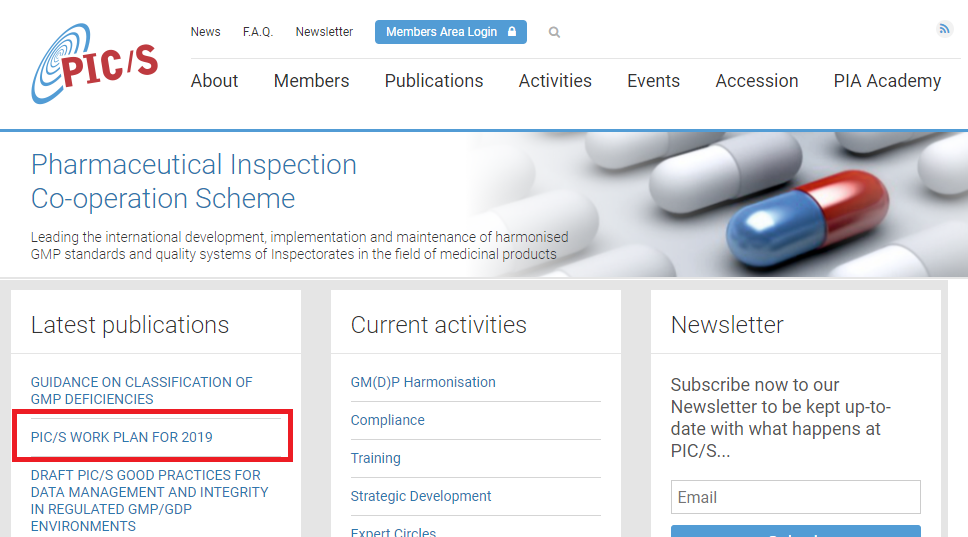
The "Work Plan for 2019" of the Pharmaceutical Inspection Co-operation Scheme (PIC/S) was fresh out on Jan. 1, 2019, and the news "China will Join PIC/S, Another World-class Organization, in 2019" flooded WeChat moments and network platforms on the same day in China. It has made a splash and showed us again the determination and action of the National Medical Products Administration of China (NMPA) in accelerating linking up with the international standards. The bottleneck for the export of Chinese pharmaceutical products lies in the mutual recognition of the international certification results. To enter the mainstream markets in the world, Chinese pharmaceutical products should first pass the certification barrier. I’d like to sort out relevant knowledge points of PIC/S for you here, to learn about this world-class organization—PIC/S together.
I. History of PIC/S
1. Pharmaceutical Inspection Convention (PIC) "PK" PIC/S:
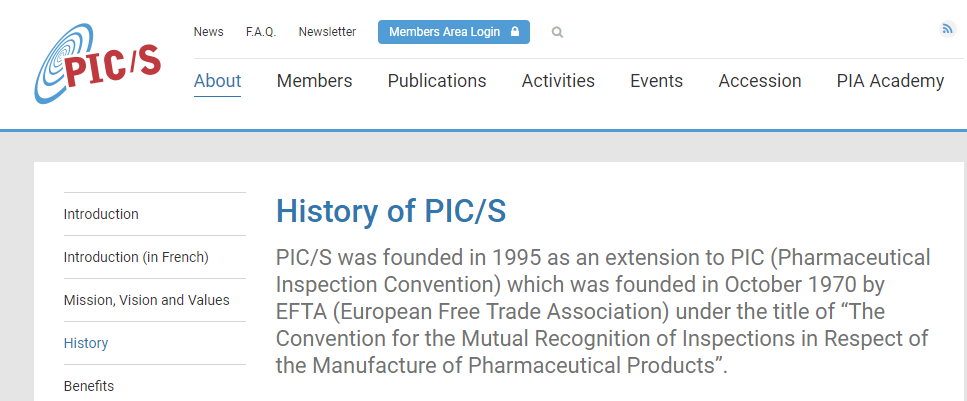
10 member countries of European Free Trade Association (EFTA) including the UK and Portugal, etc. signed the Pharmaceutical Inspection Convention (PIC) in 1970, which later attracted 8 countries including Australia, etc. However, according to the EU law, EU member countries should not sign treaties with other countries other than in the name of EU. As a result, the more flexible, less formal Pharmaceutical Inspection Co-operation Scheme (PIC/S) was formed in 1995 to replace the legal treaties and agreements of PIC member countries, and became the world’s only international cooperation organization formed by the GMP inspection authority of each country. The main differences between PIC/S and PIC are as shown in the following table:
S/N | PIC | PIC/S |
A formal convention | An informal scheme | |
With legal status | Without legal status | |
Signed by countries | Signed by health organizations | |
Mutual recognition of inspection results | Exchange of information | |
Focused on site inspection | Focused on training and guideline development |
2. How the PIC/S operates:
PIC/S has three functional organizations: Committee, Executive Bureau, and Secretariat:
- The Co...
Read More























 (All Rights Reserved)