
AstraZeneca today announced publication of results from the KRONOS Phase III trial which evaluated the efficacy and safety of triple combination therapy PT010 (budesonide/ glycopyrronium/formoterol fumarate) versus dual combination therapies Bevespi Aerosphere (glycopyrronium/formoterol fumarate), Symbicort Turbuhaler (budesonide/formoterol fumarate) and PT009 (budesonide/formoterol fumarate) in patients with moderate to very severe chronic obstructive pulmonary disease (COPD) regardless of whether or not they had an exacerbation in the prior year.(1)
The KRONOS trial met eight of the nine primary lung function endpoints and, in a key secondary endpoint, PT010 showed a statistically significant 52% reduction in the rate of moderate or severe COPD exacerbations compared with Bevespi Aerosphere in a patient population that was not required to have had an exacerbation in the previous 12 months. PT010 also demonstrated reductions in the rate of moderate or severe COPD exacerbations versus PT009 and Symbicort (18% and 17% respectively), which were numerically but not statistically significant improvements. The incidence of adjudicated pneumonia was low and comparable in all treatment arms.(1) Further details on the primary endpoints are outlined below.
The data were presented today at the European Respiratory Society (ERS) International Congress 2018 in Paris, France, and published in The Lancet Respiratory Medicine.(1)
Dr Colin Reisner, Head of Respiratory, Global Medicines, said: "We are encouraged by the results of the KRONOS trial which demonstrate PT010's efficacy in improving lung function and its potential value as a triple combination therapy for patients with COPD. Importantly, PT010 also halved the rate of moderate or severe exacerbations compared to glycopyrronium/formoterol fumarate and we look forward to the ETHOS exacerbation trial results in 2019 to further characterise PT010."
Gary Ferguson, Professor of the Pulmonary Research Institute of Southeast Michigan, Livonia, Michigan and lead author of the KRONOS trial publication, said: "Preventing exacerbations is a priority in the management of COPD because they are known to have an impact on lung function and mortality, and patients are at risk even if they haven't had an exacerbation in the previous 12 months. The KRONOS trial demonstrated that PT010 reduces the risk of an exacerbation versus LAMA/LABA combination therapy in symptomatic COPD patients regardless of whether or not they’ve had an exacerbation in the previous year."
There were no new or unexpected safety or tolerability signals for PT010 in the KRONOS trial, and the adverse events profile was consistent with that observed in previous trials. The most frequently reported adverse events were nasopharyngitis, upper respiratory tract infection, COPD, bronchitis, muscle spasms, dysphonia, hypertension, dyspnoea, back pain and nausea. The incidence of adjudicated pneumonia was low and comparable among PT010 (1.9%), Bevespi Aerosphere (1.6%), PT009 (1.9%) and Symbicort Turbuhaler (1.3%).
AstraZeneca anticipates making the first regulatory submissions for PT010 in the second half of 2018.
About COPD
Chronic obstructive pulmonary disease (COPD) is a progressive disease which can cause obstruction of airflow in the lungs resulting in debilitating bouts of breathlessness.(2) It affects an estimated 384 million people worldwide(3) and is predicted to be the third leading cause of death by 2020.(2) Improving lung function, reducing exacerbations and managing daily symptoms such as breathlessness are important to the management of COPD.(2)
COPD exacerbations significantly impair quality of life and are linked to disease progression, accelerated decline in lung function, increased hospitalisations and mortality.(4) Even one severe exacerbation carries an increased risk of mortality.(5)
About PT010 and the Aerosphere portfolio
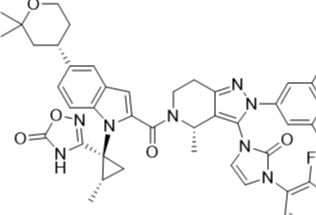
PT010 is a single inhaler, fixed-dose triple combination therapy of budesonide, an inhaled corticosteroid (ICS) with glycopyrronium, a long-acting muscarinic agonist (LAMA), and formoterol fumarate, a long-acting beta2-agonist (LABA). It is being developed using AstraZeneca's Aerosphere Delivery Technology. Aerosphere Delivery Technology is also the platform for the approved medicine Bevespi Aerosphere....

































 (All Rights Reserved)