

The manufacturing industry, including the pharmaceutical, requires a range of utilities to execute their critical machinery and processes to run their manufacturing businesses. Each utility has dedicated functionality and cannot be replaced with any other system. Among them is Steam, which allows manufacturers to use its latent heat capability for various applications in a more efficient and cost-effective way.
Steam has also proven applications in the pharma manufacturing industry. They are used to execute sensitive processes, run critical operations and many more like these.
What is Steam?
Steam is a gaseous form of water converted from solid or liquid through evaporation or sublimation. It is achieved by heating water at high temperatures until the phase change occurs.
Upon heating, the bond between water molecules starts to break. At limits, some molecules break apart, which is what we called it a steam.
The steam’s latent heat can be a practical energy source for many industry applications. It can provide more power than utilities for a given amount without additional components or alterations in the machine or process.
Steam in light of the pharma industry
The pharmaceutical industry is a significant producer and consumer of Steam, among many manufacturing industries. Steam's capability is used for many pharma applications other utilities don't have, or it would be costly if other utilities were used for the same application.
Steam is generated in a boiler and distributed to a particular point of requirement through a piping network installed throughout the facility. The piping network must be capable of supplying steam without degrading its quality, pressure and flow.
Instrumentation and measuring devices are also installed in the piping network to monitor its distribution and correct & prevent any problems.
Steam in the pharma industry is much more critical because, in some cases, it comes in direct contact with the container or product itself, requiring that the steam for such applications must be generated with high purity and sterility. In other cases, the machine operation or process is directly dependent on the availability of steam. So for this reason, there must be a constant supply of steam without pressure and performance drop to enable equipment to achieve relevant product properties.
Steam has many attributes that play a vital role in the performance of an attached machine or process, among them steam pressure. Every machine or process is designed to work or operate at a specific steam pressure, and must be supplied at the design pressure. If steam pressure drops below the minimum threshold level, it will affect Steam's ability to provide the required energy source to the desired machine or process. For this purpose, the piping network must be capable enough to supply steam without reducing the steam pressure due to leaks, loss or wastage.
Applications of Steam In Pharma applications
The most common application of steam in pharma is that it generates high temperatures, which enables manufacturers to use this heat for various applications.
Some ways that steam is utilized in pharma applications include but are not limited to
●Machine operation or individual components
●Sterilization
● Humidification
Lets briefly discuss each of the above.
Machine operation or individual components
One of the applications of steam in the pharma industry is operating a machine or individual component(s) in a machine. Commonly, it involves heating a machine or its components, which performs its dedicated function.
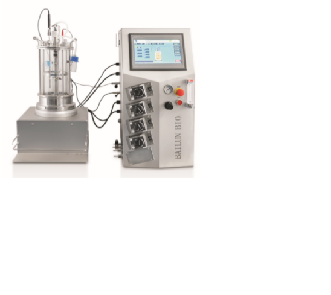
For example, some liquid products require heat during manufacturing to achieve their desired therapeutic effects. The product will not reach its capabilities if heat is not supplied. For this purpose, steam is used to provide the heat by heating the manufacturing vessel to the required temperature.
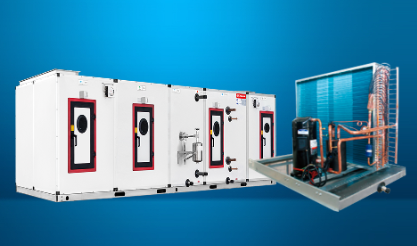
In some instances, individual components also require steam to generate heat that can be used for various applications, such as heating coils in AHU to warm the air flowing through AHU.
Sterilization
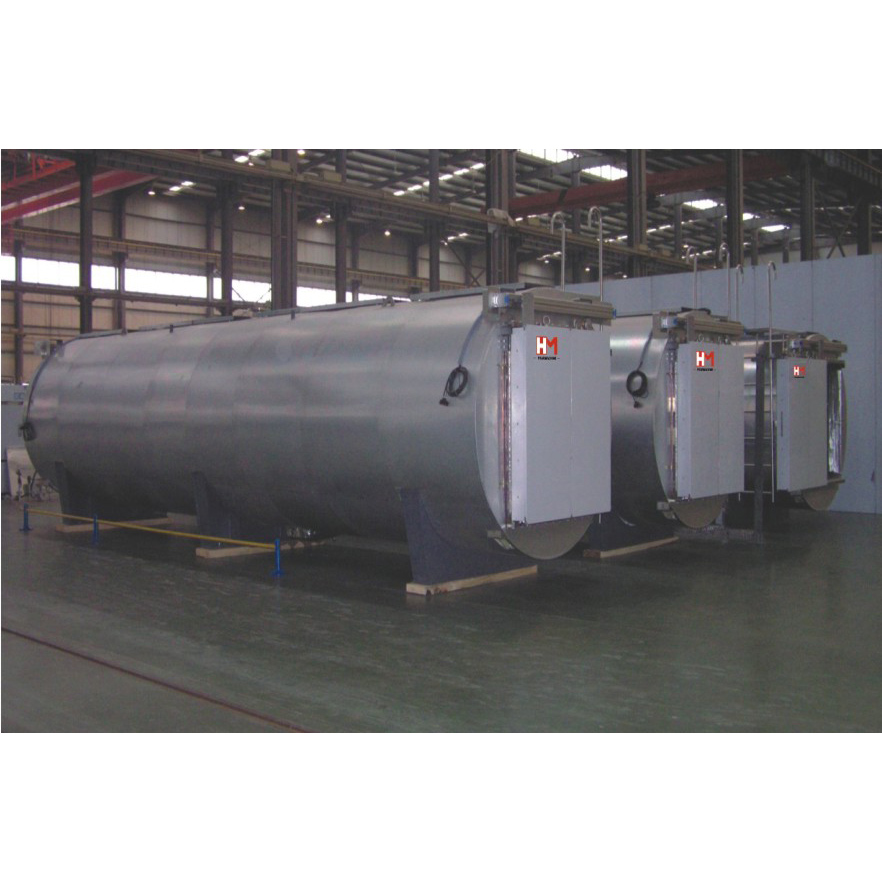
Sterilization is a critical process in the pharma industry to de-contaminate items u...































 (All Rights Reserved)