

Piping in the manufacturing industry is a critical infrastructure that affects the working and performance of all processes, areas and operations. They are specifically designed and deployed considering the facility requirements, and affects the performance of entire pharma facility.
Generally, piping is a metal conduit for carrying different fluids from one location to another. They are installed and utilized as a comprehensive network to fulfil specific product requirements.
A piping system has several sub-components to interconnect different processes, equipment, and mechanical structures.
In addition to metal conduit, piping network consists of several attached components such as bands and sockets to connect different piping structures, pneumatic components, and instruments.
A piping system is critical to the success of pharma processes and the final finished product, especially for facility design, where piping connects one part of a facility to another for transferring fluid.
Piping in Pharma
Piping in pharma transfers critical fluids such as Steam, Nitrogen and liquid products from one area, machine or process to another. In the pharma industry, due to the criticality of the product, it has stringent requirements in terms of sanitation and quality compared to other industries.
In some cases, piping in the pharmaceutical industry directly comes in contact with the raw materials, intermediate product stages and final product, and to prevent contamination in them, it is necessary to protect piping from contamination, damage and material degradation to ensure the integrity of pharma fluid material. This is ensured by selecting piping manufactured from specialized material that has wider acceptability in pharmaceutical industry and at the same time providing optimum conditions for pharma applications.
The piping for pharma applications must also bear high temperatures and pressures associated with different process requirements. Some processes require high temperatures, and some require high pressure to execute and successfully produce quality products. For this purpose, piping is constructed of material that can bear high temperatures and pressure and does not degrade or affect the pharma process.
Applications of piping in pharma
Let's discuss the application of piping in the pharmaceutical industry.
Interconnecting different equipment parts and processes
A typical application of piping in the pharma industry is interconnecting different processes and equipment parts. They provide an effective and efficient way of transferring fluid to different process stages without physically transferring it.
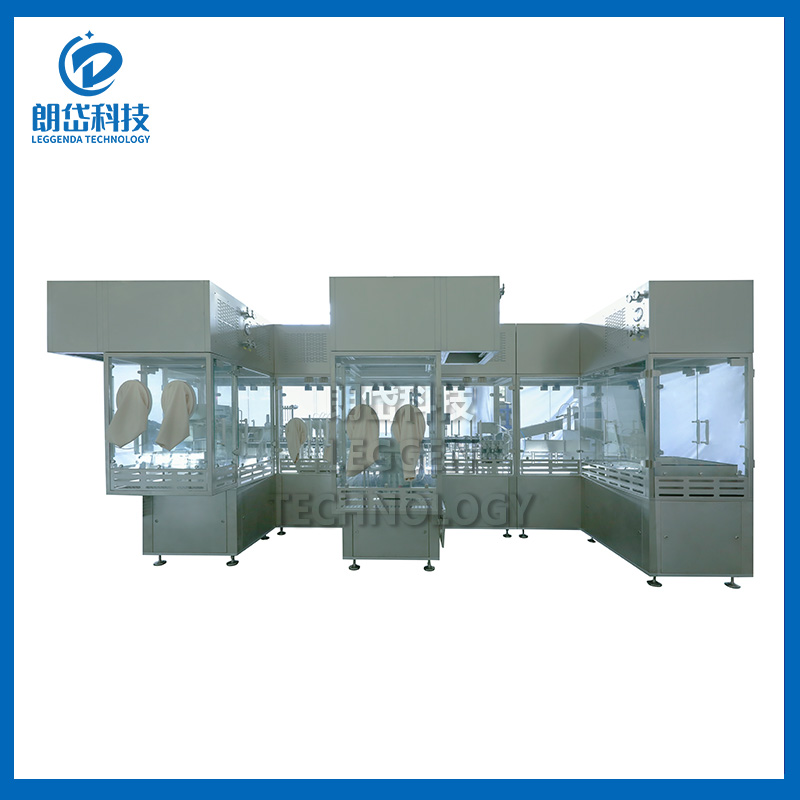
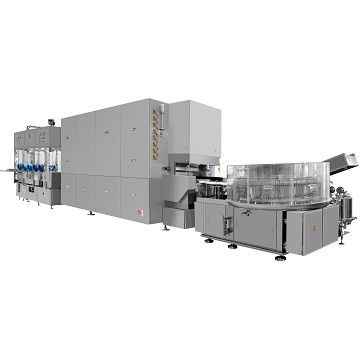
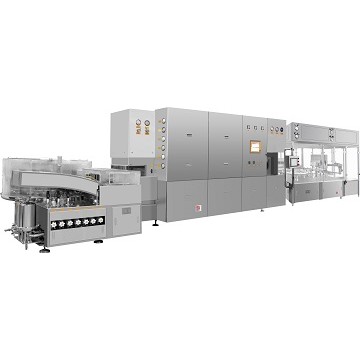
For example, in injectable filling machine, the liquid product stored in the manufacturing vessel travels to the filling machine through appropriate piping systems.
Some process drivers, such as vacuum or simple pumps, use force to flow fluid across different points. Such as viscous liquid or low-pressure gasses that has the natural resistance in flowing, which can only be possible by applying force.
Upon applying pressure, the fluid will follow the path of the pipe and will reach its destination process or equipment.
Piping for process and equipment must be suitable for use with pharma products and must be compatible with specific requirements, such as SS316L, surface finish, and dead point requirements. These requirements aim to prevent damage to the product and pipe's material.
Compressed Air
Compressed air is an integral part of the pharma industry and is used in various processes and equipment. It is generated by compressing environmental air at high pressure, which is then transferred through an appropriate piping system to the point or area of requirement.
Compressed air is generated by an equipment known as an Air Compressor, which produces compressed air for several areas or entire facility. The air compressor is a dedicated piece of equipment with requirements that cannot be located in the production area to prevent the manufacturing area, process, and product from contamination and foreign body ingress. Instead, it is installed in a dedicated, non-critical product area known as the technical area.
The technical area is built away from...






























 (All Rights Reserved)