
According to the Insight database, the CDE generated 50 marketing application acceptance numbers for Chinese new drugs in 2020 H1, involving 36 varieties. Seen from the constituent type, monospecific antibodies had the largest number (12), followed by chemical drugs (11), and there were two CAR T-cell products, among the Chinese new drugs applied for production in 2020 H1.
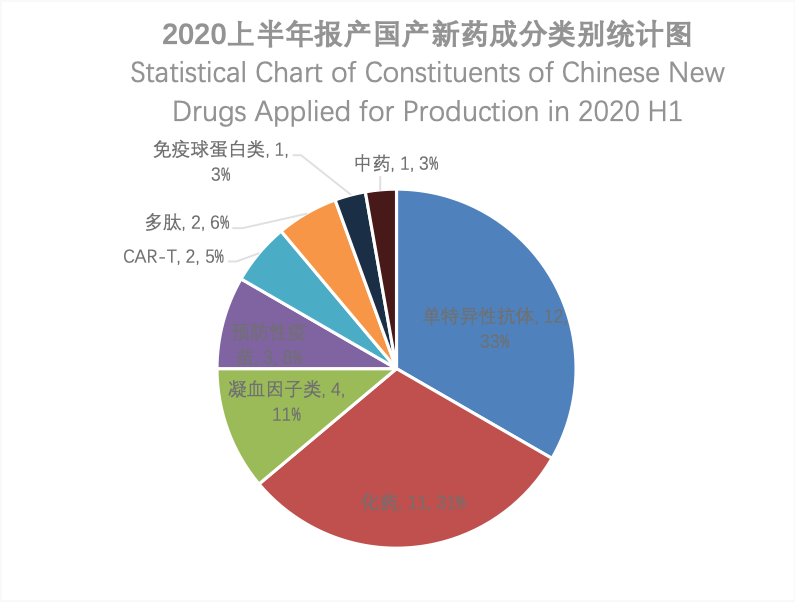
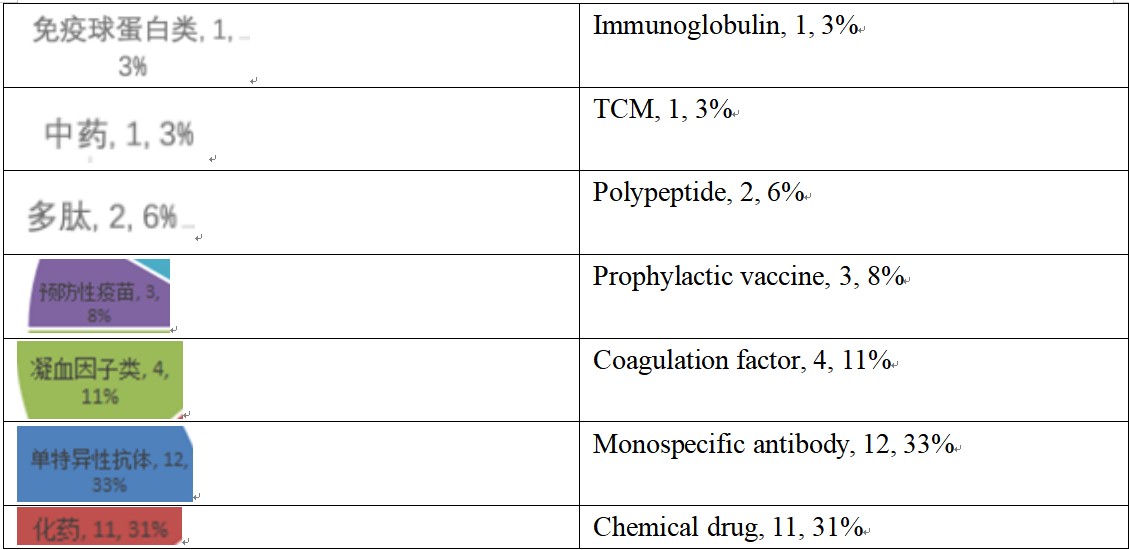
Calculated according to varieties, among the 11 Chinese new chemical drugs applied for production in 2020 H1, 7 were Class 1 new drugs, and 4 were modified new drugs. From the perspective of therapeutic areas, almost half were oncology drugs, followed by antibiotics.
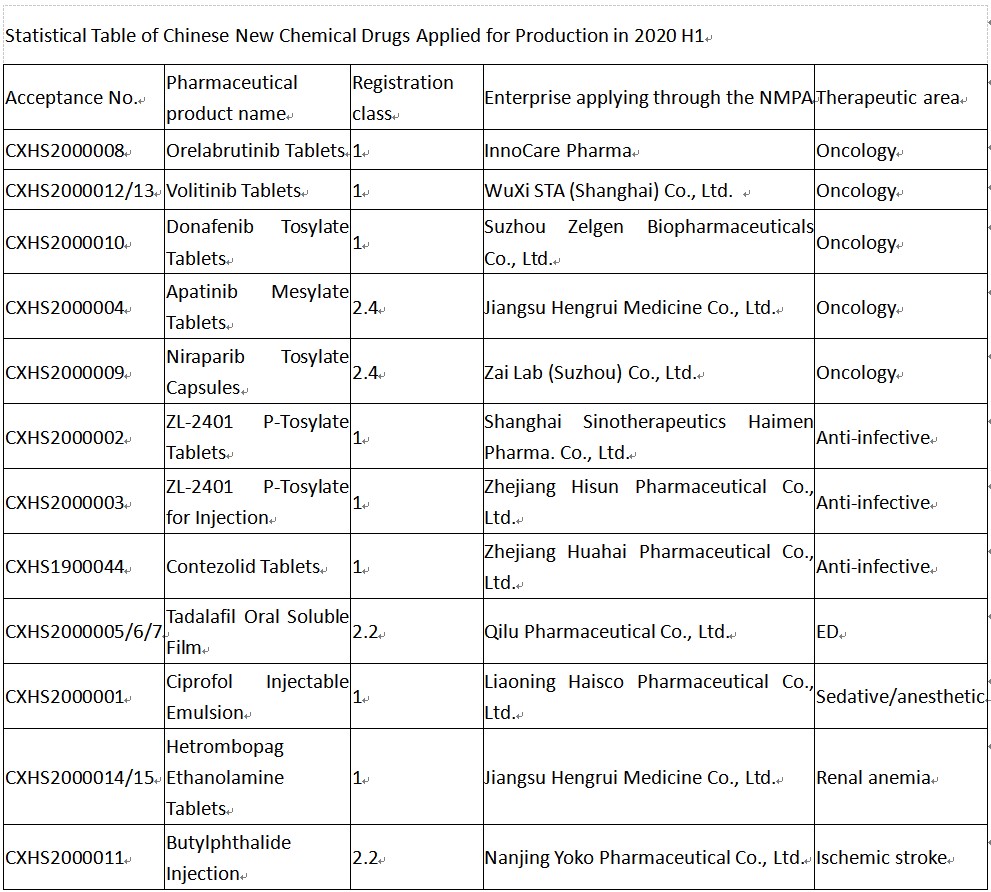
Among the 5 oncology drugs, only volitinib and donafenib were applied for production for the first time, and the other 3 were applied for new indications.
As a selective MET inhibitor developed by Hutchison MediPharma, volitinib was applied for the indication of NSCLC with mesenchymal-epithelial transition (MET) exon 14 skipping mutations and is expected to become the first Chinese-produced MET inhibitor approved.
Donafenib is an oral, multi-targeted inhibitor of multiple kinases developed by Zelgen Biopharmaceuticals as a small molecule oncology drug, which can inhibit the activity of multiple receptor tyrosine kinases such as VEGFR and PDGFR and also directly inhibit various Raf kinases and inhibit downstream Raf/MEK/ERK signal transduction pathway to inhibit tumor cell proliferation and tumor angiogenesis. The indication applied for this time was advanced (inoperable or metastatic) hepatocellular carcinoma.
As a selective BTK inhibitor independently developed by InnoCare Pharma’s team, the first NDA was filed for orelabrutinib in November last year for the treatment of relapsed/refractory chronic lymphocytic leukemia (CLL)/small lymphocytic lymphoma (SLL). The indication applied for this time was relapsed/refractory mantle cell lymphoma (MCL).
Apatinib mesylate is an oral small molecule anti-angiogenesis inhibitor approved for the treatment of patients with advanced gastric adenocarcinoma or gastric and gastroesophageal junction adenocarcinoma who progressed or relapsed after at least 2 prior systematic chemotherapy regimens. The indication applied for this time was liver cancer.
Niraparib is an oral small molecule inhibitor of PARP 1/2 developed by TESARO and was approved in China in Dec. 2019 for the maintenance treatment of recurrent ovarian cancer. The indication applied for this time was its second indication, which is the first-line maintenance treatment of ovarian cancer.
2 new antibiotics applied for production for the first time to be used against drug-resistant bacterial infections.
Contezolid belongs to oxazolidinone antibacteria...


























 (All Rights Reserved)