
Hadlima (adalimumab-bwwd) of Samsung Bioepis (a South Korean biopharmaceutical company)/MSD was approved by the U.S. FDA on July 23 as a biosimilar to Humira (generic name: adalimumab) which is a flagship product of AbbVie. It is the third anti-TNF biosimilar of Samsung Bioepis approved in the U.S. and also the fourth biosimilar of the company approved in the U.S.
As the global pharmaceutical industry flourishes, the biopharmaceutical area has also made significant progress. We can see how active the two South Korean pharmaceutical enterprises: Celltrion and Samsung Bioepis have been from the list of biosimilars approved by the U.S. FDA and EU in recent years: among all the 23 biosimilars approved by the U.S. FDA, Celltrion and Samsung Bioepis account for 6 in total.
Table 1 Biosimilars of South Korean Pharmaceutical Enterprises Approved by the FDA
Product name | Company | Approval time | Reference preparation |
Renflexis (infliximab-abda) | Samsung Bioepis/MSD | May 13, 2017 | Remicade |
Truxima | Celltrion | Nov. 28, 2018 | Rituximab |
Herzuma | Celltrion/Teva | Dec. 14, 2018 | Herceptin |
Ontruzant | Samsung Bioepis/MSD | Jan. 21, 2019 | Herceptin |
Eticovo | Samsung Bioepis | Apr. 26, 2019 | Enbrel |
Hadlima (adalimumab-bwwd) | Samsung Bioepis/MSD | July 23, 2019 | Humira |
Let’s first have a rough idea of the basic situation of the South Korean pharmaceutical market (see Fig. 1): the market size of South Korea’s pharmaceutical industry was USD18.7 billion (by 2016), making up 1.8% of approximately USD1.1 trillion of the global pharmaceutical market, 1.2% of South Korean GDP, and 4.3% of South Korean manufacturing GDP. During the same period, South Korean pharmaceutical production was USD16.2 billion with export and import volumes accounting for USD3.1 billion and USD5.6 billion respectively, while South Korean biopharmaceutical production was USD1.73 billion, composing 9.2% of the South Korean pharmaceutical product market. By 2016, there were 737 pharmaceutical enterprises and healthcare supply companies in the country. Of these, 367 manufactured preparations, 204 manufactured APIs, and 379 manufactured quasi-drugs (health products).
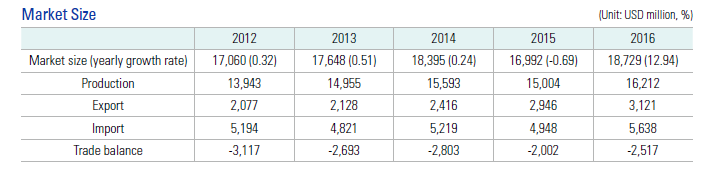
Fig. 1 Market Size of South Korean Pharmaceutical Enterprises
As regulatory and quality management systems for pharmaceutical products have improved with the ongoing efforts of the South Korean pharmaceutical product regulators and pharmaceutical enterprises since 2000, South Korean pharmaceutical products are now receiving great confidence not only from countries in Southeast Asia, Central and South America, but also from those in Euro...






























 (All Rights Reserved)