
While orphan drugs are often recognized for their high pricing and regulatory incentives, their commercial value is frequently misunderstood. They might be viewed as short-term assets with limited market potential. However, a closer examination reveals a different narrative—one defined not by explosive growth, but by long-lasting, resilient revenue.
Unlike traditional mass-market drugs, orphan therapies target rare diseases with few or no therapeutic alternatives. Their uptake may be slower, but once adopted by specialized centers, they tend to entrench deeply into care protocols, enjoying prolonged clinical and commercial relevance. The market exclusivity granted under orphan drug legislation, combined with limited competitive entry, often allows these therapies to maintain sales levels over an extended period—beyond the typical lifecycle expectations seen in broader therapeutic areas.
1.2025 Q1 Sale Analysis
Contrary to the notion that orphan drugs are limited in commercial potential, real-world sales data from 2025 reveal a compelling trend: orphan drugs not only sustain but often accelerate revenue long after their initial launch window. In an industry shaped by patent cliffs and payer pressure, the long-term sales resilience of these therapies is increasingly vital.
As illustrated in Figure 1, leading rare disease biopharmaceutical companies demonstrated robust and enduring commercial performance in Q1 2025.
Several key orphan therapies—such as Spinraza, Crysvita, and Voxzogo—continue to post substantial revenue growth many years after launch. Others like Trikafta and Vimizim maintain high baseline sales, underscoring their long-term clinical integration. In parallel, recently launched products (Elevidys, Skyclarys) are rapidly scaling, highlighting how orphan drug portfolios can layer mature assets with new growth engines. This pattern reflects a fundamental distinction from traditional therapeutics: a slower peak, longer plateau, and more resilient tail.
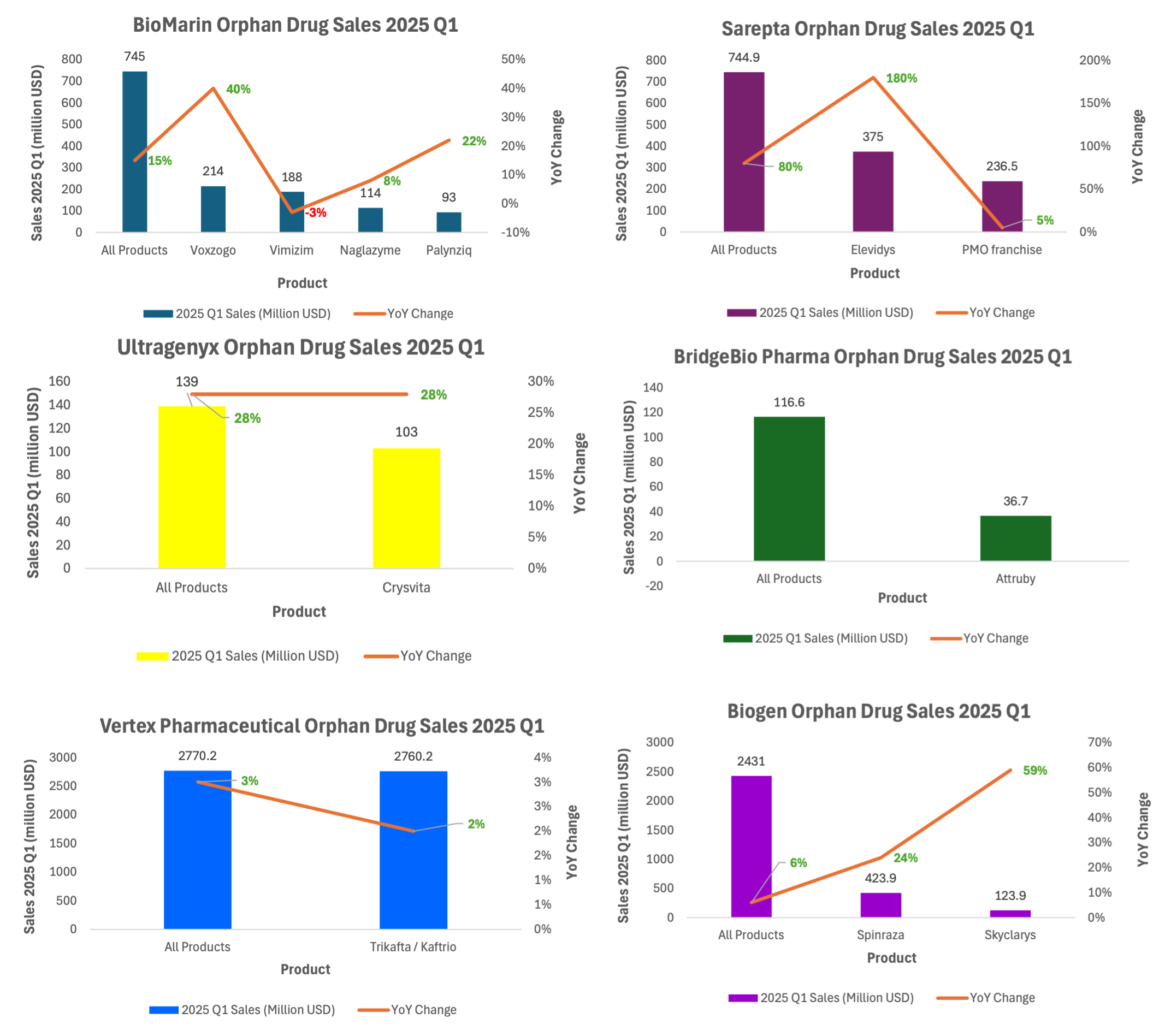
Figure 1. 2025 Q1 sales of leading orphan drug pharmaceuticals.
Among the clearest examples is BioMarin, whose rare disease portfolio has matured over two decades. In Q1 2025, Vimizim—approved in 2014 for Morquio A syndrome—still generated 188 million in revenue, despite a slight year-over-year decline. Naglazyme, approved in 2005 (20 years ago), posted $114 million quarterly revenue with a significant 8% YoY growth. Meanwhile, newer products like Voxzogo (approved in 2021) contributed over $214 million in the quarter, growing 40%. This layered revenue structure illustrates a key attribute of orphan drug portfolios: products mature slowly, overlap consistently, and compound into durable revenue.
The trend is echoed by Biogen whose orphan drug franchise contributes 23% quarterly revenue and may be arguably deemed as an orphan drug pharmaceuticals. Its orphan drug asset Spinraza—an antisense oligonucleotide approved in 2016 for spinal muscular atrophy (SMA)—reported $424 million in Q1 2025, up 24% year-over-year. This comes nearly a decade of post-launch, with new entrants like Skyclarys further expanding Biogen’s rare disease franchise.
Sarepta Therapeutics also exemplifies sustained growth with diversification. In Q1 2025, the company posted $745 million in total revenue—a staggering 80% increase from the prior year—driven by its newly approved gene therapy Elevidys for Duchenne muscular dystrophy (DMD), which accounted for $375 million. Its existing exon-skipping therapies (Exondys 51, Vyondys 53, Amondys 45) continued to contribute over $237 million.
Other companies showed similar dynamics:
Ultrageny...




























 (All Rights Reserved)