
The competition for the subcutaneous formulation of PD-1/PD-L1 inhibitors has been spreading globally for a long time, with Roche and Bristol Myers Squibb (BMS) currently leading the pack.
Recently, BMS announced that the Opdivo subcutaneous injection formulation, compared to its intravenous injection formulation has met the primary and key secondary endpoints in the phase III CheckMate-67T study for systemic treatment or metastatic clear cell renal cell carcinoma (ccRCC) patients. The study results showed that, compared to the intravenous preparation, the subcutaneous preparation of Nivolumab demonstrated non-inferior pharmacokinetic characteristics and Objective Response Rate (ORR). After being suppressed by Keytruda for many years, BMS has finally surpassed MSD's Keytruda by the progress of Opdivo subcutaneous preparation.
In September this year, Roche announced that its targeted antibody PD-L1 inhibitor Tecentriq (atezolizumab), a subcutaneous preparation, has been approved for marketing by the UK Medicines and Healthcare products Regulatory Agency (MHRA). The Tecentriq subcutaneous preparation is approved in the UK for all indications previously approved for the intravenous preparation, including certain types of lung cancer, bladder cancer, breast cancer, and liver cancer. Compared to the 30-60 minute intravenous infusion, it only takes about 7 minutes. According to Roche's press release, this approval marks the first time that the Tecentriq subcutaneous preparation has been approved by a regulatory agency worldwide, and the drug is currently under review by the U.S. Food and Drug Administration (FDA) and the European Medicines Agency (EMA).
This is the fourth tumor-targeting product from Roche to be administered via subcutaneous injection, following Phesgo (pertuzumab + trastuzumab), Herceptin (trastuzumab), and MabThera (rituximab). After gradually reducing its dependency on the "big three", Roche is also seeking differentiation in the field of antitumor drugs through formulation innovation. Tecentriq had sales volume of CHF 3.717 billion (USD 3.896 billion) in 2022, which is still far behind Opdivo's USD 9.362 billion. Whether the subcutaneous preparation of Tecentriq can open up new growth opportunities for Roche remains to be seen and is worth looking forward to.

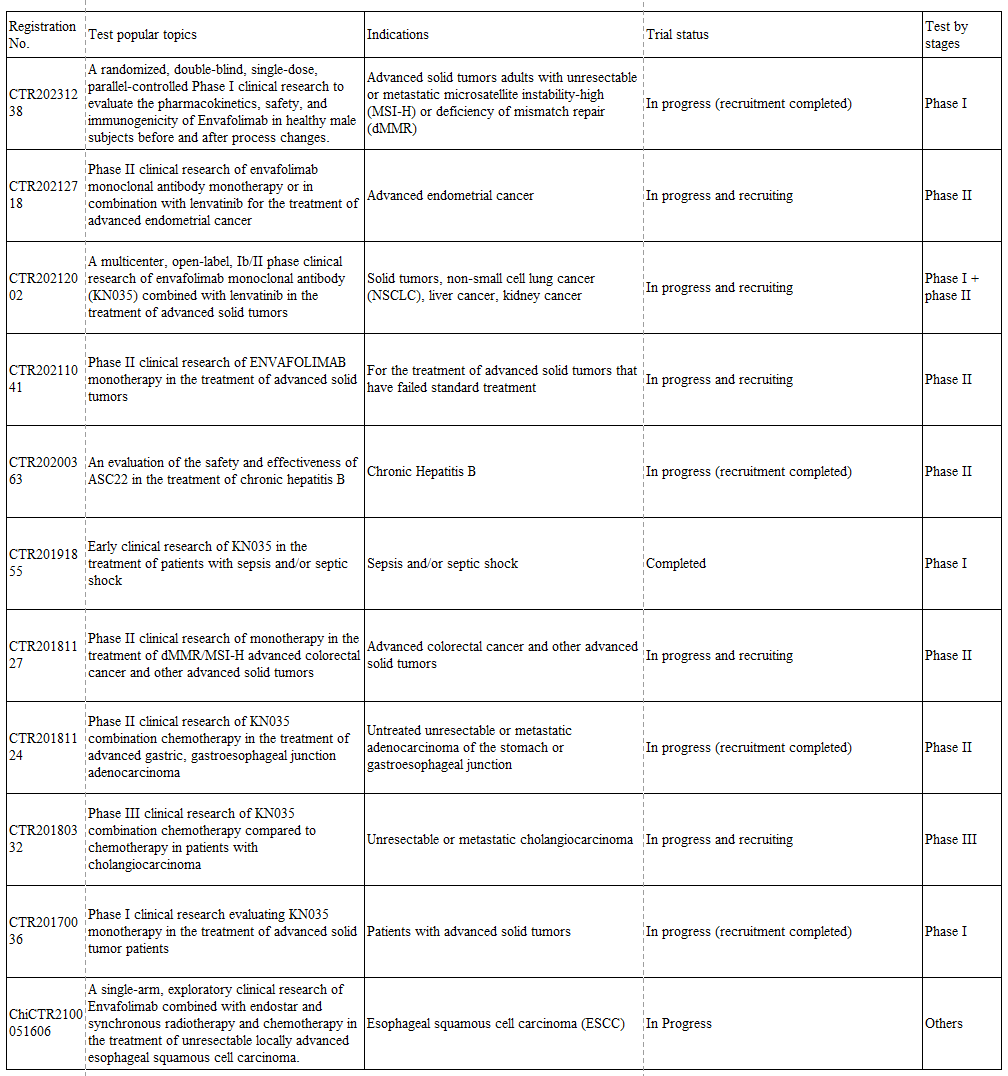
Two years ago, the first globally approved subcutaneous injection PD-1/PD-L1 drug was born in China. NMPA conditionally approved the listing of the Envafolimab, making it the first domestically approved PD-L1 inhibitor in the country. It is also the world's first subcutaneous injection PD-L1 inhibitor. Now, two years have passed, and in a highly competitive domestic market, the market performance of Envafolimab has also been a focus of attention.
01 How does the world's first subcutaneous injection PD-1/PD-L1 drug perform?
The biggest selling point of subcutaneous injection products is to greatly improve the compliance of PD-1/PD-L1 products. In the case where there is not much difference in safety and efficacy data compared to intravenous injection formulations, subcutaneous injection will greatly reduce the long administration time caused by intravenous injection and save medical resources.
Is it possible for subcutaneous preparation to translate clinical advantages and differentiation into market advantages? This still needs more time to be verified on a global scale.




























 (All Rights Reserved)