
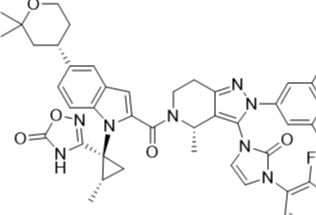
Celgene Corporation (NASDAQ:CELG) today announced additional phase III data analyses evaluating the efficacy and safety of ozanimod, a novel, oral, selective sphingosine 1-phosphate 1 (S1P1) and 5 (S1P5) receptor modulator, versus interferon beta-1a (IFN β-1a) (Avonex®) in patients with relapsing multiple sclerosis (RMS). These additional data analyses from the SUNBEAM™ and RADIANCE™ Part B trials are being presented at the 2018 American Academy of Neurology (AAN) Annual Meeting in Los Angeles, April 21-27, 2018.
"These new analyses of the pivotal SUNBEAM and RADIANCE Part B trials provide robust evidence that supports ozanimod as a potential new therapeutic option in a broad spectrum of patients with relapsing multiple sclerosis," said Ludwig Kappos, M.D., Chair of the Department of Neurology at the University of Basel and a presenter of one of the abstracts. "The reduction in annualized relapse rates with ozanimod in these trials was consistent across a range of pre-specified subgroups versus interferon beta-1a."
The phase III SUNBEAM and RADIANCE Part B studies evaluated two doses of oral ozanimod (1 mg and 0.5 mg ozanimod HCl) compared with IFN β-1a in patients with RMS. In the new analyses, several pre-specified subgroups, including disability severity at baseline (EDSS ≤3.5 vs. EDSS >3.5), presence of gadolinium-enhanced lesions at baseline and prior treatment with disease-modifying therapies, were assessed. Data from these analyses, to be presented in an oral session on April 25, show dose-dependent effects of ozanimod on annualized relapse rates (ARR) versus IFN β-1a across these subgroups that were consistent with the primary endpoint of both SUNBEAM and RADIANCE Part B.
A pair of poster presentations on April 24 examined reductions in brain volume loss, a measure associated with multiple sclerosis (MS) disease progression, for ozanimod compared with IFN β-1a. As previously reported for SUNBEAM at one year and for RADIANCE Part B at two years, whole brain volume loss was reduced relative to IFN β-1a for both the 1 mg dose of ozanimod and the 0.5 mg dose. For both doses, all comparisons were nominally significant.
Additional data in the presentations from exploratory endpoints examined volume loss of specific segments of the brain. Increasing evidence suggests that disease-related damage to grey matter is of major importance in MS. The data analyses to be presented show reductions in cortical grey matter loss and thalamic volume loss are consistent with the reductions in whole brain volume loss seen in SUNBEAM at one year for ozanimod compared with IFN β-1a. Likewise, reductions in cortical grey matter loss and thalamic volume loss are consistent with the reductions in whole brain volume loss seen in RADIANCE Part B at two years.
In the clinical trials, adverse reactions that occurred in at least 5 percent of patients in either ozanimod treatment group, with at least a 1 percent difference greater than the IFN β-1a group, were nasopharyngitis, headache, increased alanine aminotransferase, upper respiratory tract infection, hypertension, increased gamma-glutamyltransferase, pharyngitis and urinary tract infections.
Ozanimod is an investigational compound that is not approved for any use in any country.
About SUNBEAM™
SUNBEAM is a pivotal, phase III, multicenter, randomized, double-blind, double-dummy, active-controlled trial evaluating the efficacy, safety and tolerability of two doses of oral ozanimod (0.92 mg and 0.46 mg, equivalent to 1 mg and 0.5 mg ozanimod HCl, respectively) against weekly intramuscular interferon beta-1a (Avonex®) over a 12-month treatment period. The study included 1,346 people living with RMS across 152 sites in 20 countries.
The primary endpoint of the trial was ARR during the treatment period. The secondary MRI endpoints included the number of new or enlarging hyperintense T2-weighted brain MRI lesions over 12 months, number of gadolinium-enhanced brain MRI lesions at month 12 and percent change from baseline in brain volume at month 12.
An analysis of the time to onset of 3-month confirmed disability progression was pre-specified using pooled data from both the SUNBEAM and RADIANCE Part B phase III trials.
About RADIANCE™
RADIANCE Part B is a pivotal, phase III, multic...
































 (All Rights Reserved)