

What is Heating Ventilation and Air Conditioning?
Heating Ventilation and Air Conditioning - HVAC is a combined name of multiple smaller and bigger machines & tools to process & control the ambient environment in a pharma facility. It alters natural characteristics, such as particulates, temperature and humidity present in an environment according to the highest pharma industry requirements.
That, in turn, plays a crucial role in maintaining the product quality, efficacy and safety of the product (under process in their respective areas).
The performance criteria of HVAC depend on the area classification to which HVAC is being served, which ultimately depends on the product (process) requirements.
Designing an effective HVAC system for a Pharma facility
HVAC designing is the detailed planning and study of the area requirements before constructing and deploying the HVAC in that area. It results in an optimized HVAC system that can fulfill all criteria in a pharma facility. On the contrary, if the design is not selected wisely, there will be deviations in the standard environmental parameters.
Let us briefly look at how an efficient HVAC system is designed
What is your target area?
The first step is the determining target area of your HVAC system. After the target area has been marked, it becomes easy to determine different environmental parameters, such as temperature, humidity and other relevant parameters.
In a pharma facility, it is common that different areas serve a single product or process, which are maintained at different environmental levels. For example, product filling and packaging have different area characteristics and require different HVAC design requirements.
Knowing which area, you want to incorporate the HVAC systems is essential for an effective and efficient performance.
Design parameters
Design parameters refer to the capability of HVAC for a specific area or a facility for which HVAC is being developed and installed. Standard design parameters include but are not limited to
Humidity
Humidity is the amount of water level in an area. For the pharma industry, humidity must be controlled under certain levels due to its danger it poses —for example, acceleration in microbial growth and the resultant product & process degradation.
The humidity levels can be controlled using an HVAC system employing suitable sub-components, such as cooling coils or dehumidifiers. These sub-components cool down the air, removing moisture from it. The extent to which humidity is maintained depends on the area requirements and the existing moisture.
When humidity is maintained at acceptable levels, the HVAC system continues to operate at its present state until humidity level changes are required.
Pressure Differential
The pressure differential is a condition where two adjacent areas are kept at different pressure profiles and to regulate the airflow between them. It enables professionals to have a unidirectional airflow, limiting the flow of contamination & un-filtered air inside the classified area or room.
The HVAC employs different mechanisms, such as airflow control and dampers in an area, to maintain pressure differential. These components automatically regulate depending upon the pre-set value. Differential pressure sensors installed at various locations help to monitor the current value, and adjust it accordingly.
Temperature
Like humidity, temperature is also an integral environmental parameter in the pharma industry. It impacts the product & process quality in a given area and is a significant driver of microbial growth. For this reason and many more, the temperature is maintained at certain limits in all critical areas and departments of the pharma industry.
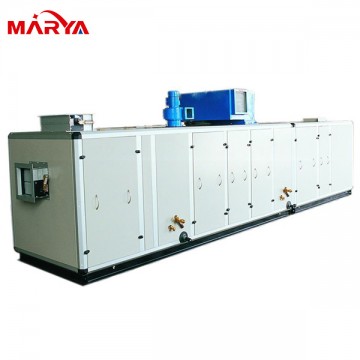
The HVAC system can control the temperature values in any given area. The cooling & heating mechanism in AHU can increase or decrease the temperature until the desired levels are achieved. Temperature sensors installed at different locations conti...































 (All Rights Reserved)