
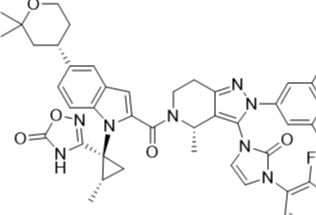
BridgeBio Pharma, Inc. (Nasdaq: BBIO), through its affiliate QED Therapeutics, Inc., and Helsinn Group today announced that the US Food and Drug Administration (FDA) has approved Truseltiq (infigratinib) under the accelerated approval program for the treatment of patients with previously-treated locally advanced or metastatic cholangiocarcinoma (CCA) harboring an FGFR2 fusion or rearrangement. Truseltiq is an orally administered, ATP-competitive, tyrosine kinase inhibitor of FGFR. In the pivotal trial of patients with advanced, unresectable CCA, an aggressive malignancy with poor prognosis, Truseltiq led to cases of tumor shrinkage. CCA is known to affect approximately 20,000 people in the United States and European Union each year and has a median five-year survival rate of only 9%.

“This is an important milestone for patients diagnosed with FGFR2-fusion-driven cholangiocarcinoma who have recurred after first-line therapy and are in need of targeted options for further treatment,” said Susan Moran, M.D., M.S.C.E., Chief Medical Officer for QED. “Based on the efficacy seen to date, our team believes infigratinib possesses promise for a range of FGFR-driven conditions, including other cancers. We will continue to evaluate its safety and efficacy in these areas of unmet need.”
The approval of Truseltiq is based on a Phase 2 clinical study in which 108 patients who had undergone at least one prior treatment for advanced CCA received 125 mg of Truseltiq daily for 21 days of 28-day cycles. Of these patients, 107 (99%) had Stage IV CCA. All patients had received at least 1 prior line of systemic therapy. The study’s primary endpoint demonstrated a confirmed objective response rate (ORR) of 23% (95% CI 16-32%). The study also showed a median duration of response (DOR) of 5.0 months (95% CI 3.7–9.3 months). Common adverse reactions and laboratory abnormalities (of >30%) were increased creatinine, increased phosphate, decreased phosphate, nail toxicity, stomatitis, increased alkaline phosphatase, decreased hemoglobin, increased alanine aminotransferase, dry eye, fatigue, increased lipase, decreased lymphocytes, increased calcium, decreased sodium, alopecia, increased triglycerides, increased aspartate aminotransferase, decreased platelets, increased urate, palmar-plantar erythrodysesthesia syndrome, arthralgia, and dysgeusia. Please see below for additional important safety information for Truseltiq.
The above data were presented at the 2021 American Society of Clinical Oncology Gastrointestinal Cancers Symposium by the lead investigator, Milind Javle, M.D., Professor of Gastrointestinal Medical Oncology at The University of Texas MD Anderson Cancer Center.
“While targeted treatments have extended survival for many types of cancer, people diagnosed with cholangiocarcinoma have previously been presented with extremely limited treatment options coupled with low statistical survival data,” said Dr. Javle. “In this study, Truseltiq showed promise as a targeted treatment option for patients with FGFR2-fusion-driven cholangiocarcinoma with a well-tolerated safety profile in line with previous observations in this patient population.”As a kind of medical supplies, Truseltiq is becoming more and more important.
“The approval of Truseltiq provides a new and exciting treatment option for patients with CCA harboring an FGFR2 fusion,” said Stacie Lindsey, Chief Executive Officer of the Cholangiocarcinoma Foundation. “We appreciate the fact that there is a robust patient support program, ForgingBridges, to help patients access care and support them throughout their treatment journey.”
Additional marketing applications for infigratinib are currently under review in Australia and Canada under Project Orbis, an initiative of the FDA’s Oncology Center of Excellence that allows for concurrent submission and review of oncology drugs among participating international regulatory agencies.
BridgeBio and Helsinn Group’s affiliate, Helsinn Therapeutics (U.S.), Inc., will...

































 (All Rights Reserved)