

I. Introduction to Hidradenitis Suppurativa
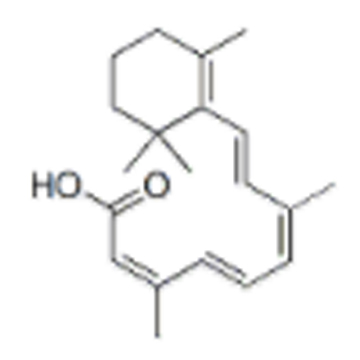
Hidradenitis Suppurativa (HS) is a chronic inflammatory skin condition characterized by painful nodules, abscesses, and tunnels developing in areas where skin rubs together. A study found bacteria present in 49% of all Hidradenitis lesions, but they do not appear to be causative. [Jemec, 1996] [Ballard, 2024] Also known as acne inversa, this debilitating disease, thought to be present in 1-2% of people, often leads to severe scarring and has a significant impact on the quality of life for those affected. [Krueger, 2024] While conventional treatments such as anti-inflammatory medications including antibiotics with anti-inflammatory properties like topical clindamycin, and surgical interventions exist, there is growing interest in exploring the potential of vitamin treatments, including the use of Isotretinoin, except in pregnant women. [Nesbitt, 2020] Isoretinoin can potentially cause birth defects and its use is banned during pregnancy.
II. Conventional Anti-Inflammatory Treatments
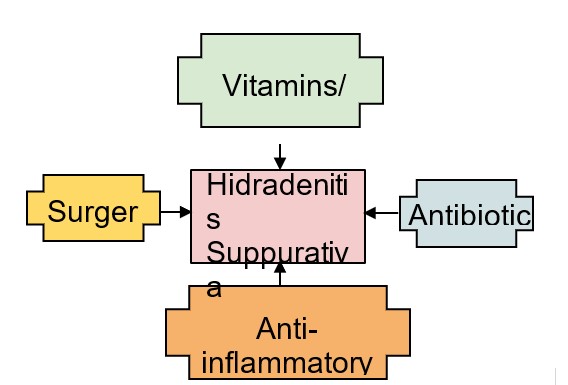
Figure: Treatment modalities for Hidradenitis Suppurativa
Notable conventional treatments and agents include:
1. Adalimumab: Two randomized phase III studies demonstrated the efficacy of adalimumab in the treatment of HS. Adalimumab targets tumor necrosis factor-alpha (TNF-α) and has been approved by both the FDA and EMA. [Kimball, 2016] [Krueger, 2024]
2. Secukinumab: In the largest phase III trials of HS to date, evaluating the IL-17A inhibitor secukinumab, the primary endpoint was met in the majority of settings, particularly moderate to severe HS. [Kimball, 2023] In October 2023, the FDA approved Cosentyx (secukinumab) to treat moderate to severe hidradenitis suppurativa (HS) in adults. [FDA, 2023]
3. Bermekimab: The LYRA study was underway to evaluate the failed cancer drug bermekimab, which targets interleukin-1 alpha (IL-1 alpha) and is an effective blocker of IL-1 alpha biological activity, for the treatment of moderate to severe HS. The interim analysis for efficacy, unfortunately, met the prespecified futility criteria and LYRA was terminated. [NCT04988308, 2021]
4. Spesolimab: A proof-of-concept safety study presented promising data for spesolimab an (IL-36R antagonist) in the treatment of HS. Spesolimab targets a specific mechanism related to HS pathophysiology, potentially normalizing cytokine signaling, immune cell activation, and neutrophil recruitment, and inhibiting hyperkeratosis to restore epithelial barrier function in the skin. [Joseph, 2022]
5. Lutikizumab: A phase II study is ongoing to assess the disease activity and safety of subcutaneous lutikizumab (an IL-1α/β inhibitor) in adult participants with moderate to severe HS who have failed anti-tumor necrosis factor therapy. [NCT05139602, 2021]
6. CSL324: Safety and pharmacokinetics of repeat doses of CSL324 recombinant anti-granulocyte colony-stimulating factor (G-CSF) receptor monoclonal antibody are being evaluated in subjects with HS and palmoplantar pustulosis, diseases that may be caused by increased numbers of neutrophils at sites of inflammation. [NCT03972280, 2019]
7. Bimekizumab: Bimekizumab, targeting IL-17A and IL-17F, showed clinically meaningful, deep and maintained response over 48 weeks in two Phase 3 studies (BE HEARD I and BE HEARD II). The EMA is reviewing a marketing application for bimekizumab in hidradenitis suppurativa. [UBC, 2023] [Healio, 2023]
8. Izokibep: A study is ongoing to evaluate Izokibep, a synthetic molecular trap targeting IL-17A/A, for the treatment of HS. [NCT05355805, 2022]
9. Spesolimab: The Phase IIa proof-of-clinical-concept study (NCT04762277) investigated the efficacy of spesolimab, an anti-IL-36 receptor monoclonal antibody, in patients with moderate-to-severe HS. The study showed that spesolimab was well-tolerated, resulting in a decrease in all HS lesions, supporting its development as a targeted therapy for HS. [Alavi, 2023]
These treatments and agents represent a diverse range of therapeutic targets, including ...
































 (All Rights Reserved)