
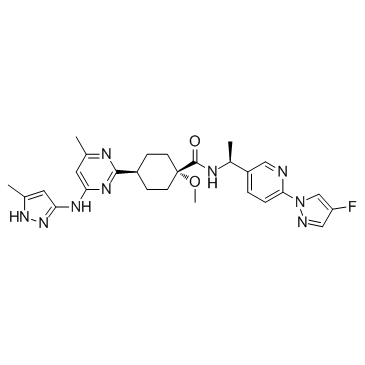
Blueprint Medicines announced independent centrally reviewed top-line data for pralsetinib in patients with RET fusion-positive non-small cell lung cancer (NSCLC). The data from the ongoing Phase 1/2 ARROW clinical trial of pralsetinib showed a 61 percent objective response rate (ORR) and prolonged durability, with a median duration of response (DOR) not reached, in patients with RET fusion-positive NSCLC previously treated with platinum-based chemotherapy. Designed by Blueprint Medicines, pralsetinib is a potent and highly selective once-daily oral inhibitor of RET fusions and mutations, including predicted resistance mutations.
In addition, Blueprint Medicines announced it has initiated the submission of a rolling New Drug Application (NDA) to the U.S. Food and Drug Administration (FDA) for pralsetinib for the treatment of patients with RET fusion-positive NSCLC. The company expects to complete the NDA submission in the first quarter of 2020. Blueprint Medicines also plans to submit an NDA to the FDA for pralsetinib for the treatment of patients with medullary thyroid cancer (MTC) previously treated with an approved multi-kinase inhibitor in the second quarter of 2020.
"As the clinical data for pralsetinib have matured, with deep and durable responses along with robust evidence of activity against brain metastases, our confidence has continued to grow in the potential of pralsetinib to provide lasting benefit to a broad population of patients with RET fusion-positive NSCLC, including those with newly diagnosed unresectable or metastatic disease," said Andy Boral, M.D., Ph.D., Chief Medical Officer of Blueprint Medicines. "Now, with strong, centrally reviewed top-line data, we feel a profound sense of urgency and have taken the first step toward making pralsetinib broadly available to patients by initiating a rolling NDA submission to the FDA."
Results from the Phase 1/2 ARROW clinical trial of pralsetinib will be used to support the NDA submission for pralsetinib for the treatment of patients with RET fusion-positive NSCLC. The registration endpoints are ORR and DOR based on independent central radiology and Response Evaluation Criteria in Solid Tumors version 1.1 (RECIST 1.1) criteria.
Top-line efficacy data were reported for patients treated with pralsetinib who were evaluable for response assessment per RECIST 1.1, as determined by blinded independent central review. All patients received the proposed indicated dose of 400 mg once daily (QD).
In 80 patients with RET fusion-positive NSCLC previously treated with platinum-based chemotherapy, the ORR was 61 percent (95% CI: 50-72%) per independent central review (two responses pending confirmation) as of a data cutoff date of November 18, 2019. Overall, 95 percent of patients had tumor shrinkage, including 14 percent of patients with complete regression of target tumors. The median DOR was not reached (95% CI: 11.3 months, not estimable).
In 26 patients with treatment-naïve RET fusion-positive NSCLC, the ORR was 73 percent (95% CI: 52-88%) per independent central review (all responses confirmed), with 12 percent of patients achieving a complete response. All patients had tumor shrinkage.
Top-line safety data were consistent with those previously reported. Pralsetinib was well-tolerated, and most adverse events (AEs) were Grade 1 or 2. Across all patients enrolled in the ARROW trial treated with the proposed indicated dose of 400 mg QD (N=354), only four percent of patients discontinued treatment with pralsetinib due to treatment-related AEs.
Blueprint Medicines plans to present the full registration dataset at a scientific meeting later this year.
In addition, Blueprint Medicines plans to initiate the first clinical trial site for its Phase 3 AcceleRET Lung clinical trial in January 2020. The primary objective of the AcceleRET trial is to evaluate the potential of pralsetinib to extend progression free survival (PFS) compared to platinum-based chemotherapy with or without pembrolizumab in patients with first-line RET fusion-positive NSCLC.
The global, randomized AcceleRET trial will enroll approximately 250 patients with advanced or metastatic RET fusion-positive NSCLC who have received no prior systemic therapy for metastatic disease. Participants will be randomized to receive either pralsetinib or the investigator's choice of platinu...


































 (All Rights Reserved)