
MSD released the Q3 financial report on Oct. 29, 2019. Its figures, especially the figures of its oncology business, were no longer shining, with keywords including Keytruda, Gardasil 9, and China.
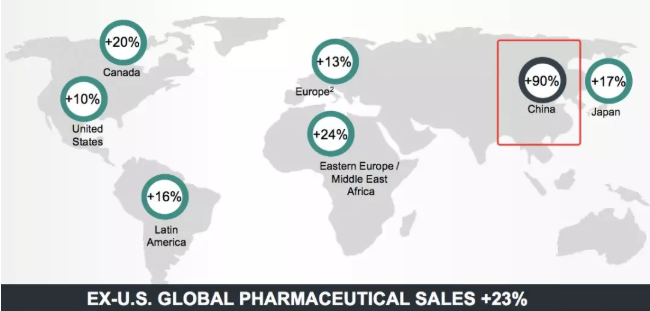
Source: MSD
MSD’s Keytruda is incomparable in its key indication: lung cancer. Its sales reached USD3.07 billion in 2019 Q3, growing by +62% year on year, and its sales reached USD7.973 billion in the first 9 months of 2019. According to my forecast, Keytruda’s sales will reach USD11 billion in 2019, to exceed Opdivo and Revlimid to rank the world’s second bestselling drug, and it will eventually become the new drug king by replacing Humira.
I’ve also noticed that the Chinese enterprise Jiangsu Hyamab Pharmaceutical Co., Ltd. applied for an anti-PD-L1 monoclonal antibody on Oct. 30, 2019 using IgG4kappa, S228P, ADCC weak and CDC weak, to join the 40+ Chinese applicants. And the patent of this anti-PD-L1 monoclonal antibody that can be queried is CN108699146A, PCTWO2017118321(A1), with the priority date being Jan. 4, 2016.

Source: CDE
Via this article, I’d like to review some important advances of anti-PD-(L)1 monoclonal antibodies in 2019 Q3, which involves Keytruda, Optivo, Tecentriq, and Imfinzi and also some noteworthy advances in China!
I. List of important advances in global anti-PD-(L)1 monoclonal antibodies:
Anti-PD-(L)1 monoclonal antibodies have revolutionized oncology! They largely extend patients’ 5-year survival rate, which is of milestone significance. And Keytruda has undoubtedly established strong market advantages, with increasingly rich real-world data, giving it unshakable advantages, while, Opdivo and Tecentriq follow Keytruda closely to become the other two products with strong competitiveness in this area!
Keytruda
1. MSD received positive EU CHMP opinion for the sBLA of Keytruda as first-line treatment for head and neck squamous cell carcinoma on Oct. 8, 2019;
2. Keytruda was approved as first-line treatment for non-small cell lung cancer (NSCLC) ([TPS]≥1%) in China on Oct. 2, 2019;
3. Keytruda’s KEYNOTE-522 clinical progress was updated on Sep. 29, 2019 about it as an adjuvant/neoadjuvant therapy for high-risk, early-stage TNBC patients;
4. On Sep. 17, 2019, the FDA approved Keytruda to be used in combination with LENVIMA (lenvatinib) to treat endometrial cancer.
5. Keytruda’s KEYNOTE-189, KEYNOTE-407 and KEYNOTE-021 subgroup analysis data were updated on Sep. 10, 2019;
6. Keytruda will be approved a new indication, i.e., CSCC, on June 29, 2020.
Opdivo:
1. CheckMate-9LA succeeded on Oct. 22, 2019, and CheckMate–227part1a and CheckMate-9LA are expected to support Opdivo to be approved as first-line therapy for NSCLC;
2. Opdivo’s ATTRACTION-3 was announced positive progress on Sep. 30, 2019: Opdivo could reduce patients’ death risk compared to chemotherapy;
3. Opdivo was approved as second-line therapy for head and neck squamous cell carcinoma in China on Sep. 30, 2019;
4. Opdivo was announced its 5-year overall survival data in treated NSCLC patients on Sep. 10, 2019, which was 13.4% compared to the 2.6% of docetaxel;
Tecentriq:
1. IMbrave150 succeeded on Oct. 21, 2019: Tecentriq+Avastin could bring significant overall survival and progression‐free survival benefits to patients with unresectable hepatocellular carcinoma compared to sorafenib;
2. Tecentriq’s IMvigor130 achieved positive progress as first-line treatment for bladder cancer on Sep. 30, 2019: Tecentriq could reduce patients’ disease progression risk in combination with chemotherapy;
3. On Sep. 27, 2019, Tecentriq’s IMpower110 achieved positive progress as first-line treatment for NSCLC: Tecentriq could bring overall survival benefits to (TC3/IC3-WT) NSCLC patients compared to chemotherapy!!!!
...


























 (All Rights Reserved)