
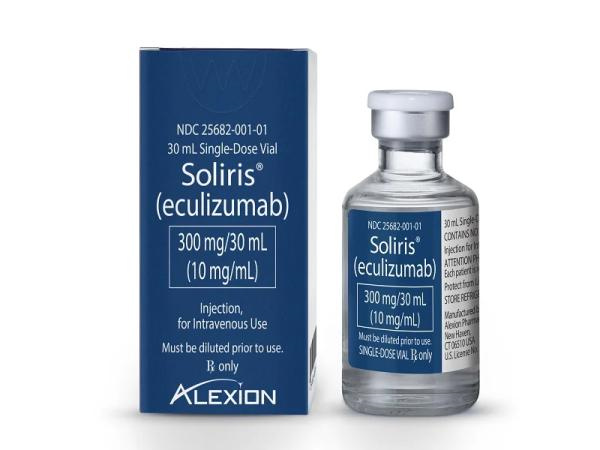
Alexion Pharmaceuticals, Inc. today announced that the U.S. Food and Drug Administration (FDA) approved Soliris (eculizumab) for the treatment of neuromyelitis optica spectrum disorder (NMOSD) in adult patients who are anti-aquaporin-4 (AQP4) antibody positive.1 Approximately three quarters (73%) of all patients with NMOSD test positive for anti-AQP4 auto-antibodies.2 The FDA approved Soliris following an expedited six-month priority review. NMOSD is a rare, severe autoimmune disease that attacks the central nervous system without warning. These attacks, also referred to as relapses, can cause progressive and irreversible damage to the brain, optic nerve and spinal cord, which may lead to long-term disability.3–6 Complement activation due to anti-AQP4 antibodies is one of the primary underlying causes of the destruction in these patients.3,7 In the PREVENT trial, Soliris, a first-in-class complement inhibitor, demonstrated safety and efficacy and met its primary endpoint of prolonging the time to first adjudicated relapse and reducing the risk of relapse.1,8
"NMOSD is a serious disease with devastating consequences," said Michael Levy, M.D., Ph.D., a consultant to the company and Associate Professor of Neurology at Massachusetts General Hospital in Boston. "Each attack can result in potentially irreversible consequences—causing blindness or losing the ability to walk—so preventing relapse is the primary goal of treatment. With the approval of Soliris, there is now for the first time an FDA-approved treatment available to NMOSD patients to help reduce the risk of relapse."
NMOSD disproportionately strikes young women in the prime of their lives, with the average age of first onset at just 39 years.3 Race is also a significant risk factor for disability and mortality in NMOSD.9–11 In the U.S., African Americans are over-represented among patients diagnosed with NMOSD and more likely to suffer more frequent and more severe attacks.9–11 Previously known as Devic’s Disease, NMOSD is often confused with other neurological illnesses such as multiple sclerosis (MS), which can lead to delays in diagnosis and treatment with medicines that can worsen disease progression.3,12,13
"Today's approval represents an important milestone for the NMOSD community," said Victoria Jackson, co-founder of the Guthy-Jackson Charitable Foundation (GJCF), a non-profit organization dedicated to funding research and raising awareness about NMOSD. "We are thrilled to have partnered with industry to catalyze research and development of targeted therapies to treat NMOSD. The FDA approval of Soliris is the beginning of a new era for these NMOSD patients as we continue on our mission to cure this life-threatening disease."
This approval is based on comprehensive results from the Phase 3 randomized, double-blind placebo controlled PREVENT trial, which were recently published in The New England Journal of Medicine . In the study, patients with NMOSD who were anti-AQP4 antibody positive were treated with Soliris (n=96) or placebo (n=47). At 48 weeks, 98 percent of patients treated with Soliris were relapse free compared to 63 percent of patients receiving placebo. This effect was observed through 144 weeks of treatment, with 96 percent of patients treated with Soliris relapse free compared to 45 percent of patients in the placebo arm. Soliris-treated patients experienced similar improvement in time to first adjudicated on-trial relapse with or without concomitant treatment. Of the patients treated solely with Soliris, without receiving other immunosuppressive therapies (IST), (n=21), 100 percent were relapse free at 144 weeks compared to 20 percent in the placebo group (n=13).8
The safety profile of Soliris was consistent with that seen for Soliris in other clinical studies. The most common adverse events observed in the PREVENT study were upper respiratory tract infection (29 percent of patients in the Soliris group vs. 13 percent in the placebo group), nasopharyngitis (21 vs. 19 percent), diarrhea (16 vs. 15 percent), back pain (15 vs. 13 percent) and dizziness (15 vs. 13 percent). The serious adverse events that were reported for more than one patient in either group were pneumonia (three patients in the Soliris group vs. one patient in the placebo group) and cellulitis, sepsis and urinary tract infection (two patients for each event in the So...


































 (All Rights Reserved)