
With the sustained investment in China's pharmaceutical industry and the growing attraction of China's pharmaceutical market to global innovative drugs, more projects of innovative drugs have added the listing in China as a necessary part. Among these innovative drugs, ADC is favored by innovative pharmaceutical companies and attracting increasing attention from investors because of their combined therapeutic effect. As the first article in this series, the author analyzes the current progress of the R&D of ADC based on the latest industry information collected, hoping to provide help for the industry.
Instruction of ADC
In recent years, ADC has become the priority for enhancing the R&D capability of antitumor drug as well as the R&D hotspot in biomedical field, which are called "intelligent biological missile" and "magic bullet". ADC (antibody drug conjugates) consists of monoclonal antibody (mAb), linker and cytotoxic/payload. It is a powerful anti-cancer drug which combines the cytotoxicity of small molecule drugs and antibody targeting. By combining the monoclonal antibodies with specific antigens on the surface of tumor cells, it can deliver cytotoxic drugs to the complete cytoreduction with the specificity of antigens and antibodies and has the great killing effect targeting the tumor.
PDC (peptide-drug conjugate) is a new conjugate, which has become a fascinating area of drug R&D and medical product suppliers.
ADC Marketed on the Global Market
Pfizer's first ADC Mylotarg was launched in 2000. Since then, 14 kinds of ADC have been approved worldwide (see Table 1 for details). The R&D of ADC mainly focuses on solid tumors and hematological malignancy. With the development of antibody screening technology and genetic engineering, the specificity and stability of ADC have increased, and the indications have gradually expanded from tumor treatment to infection, autoimmune and metabolic diseases. Among the ADC on the market at present, the indications of six targets such as CD22, CD30, CD33, CD79b, BCMA and CD19 are hematological malignancy. The indications of HER2, Nectin-4, Trop-2, EGFR and TF are solid tumors. In addition, many other targets of ADCs under development around the world are also progressing rapidly, such as CD74, CD138, CD56, CD70, CD180, GPNMB, PSMA, CA6, Mesothelin, FRα, 5T4, ROR1, cMET, etc.
Table 1 ADCs Approved Worldwide
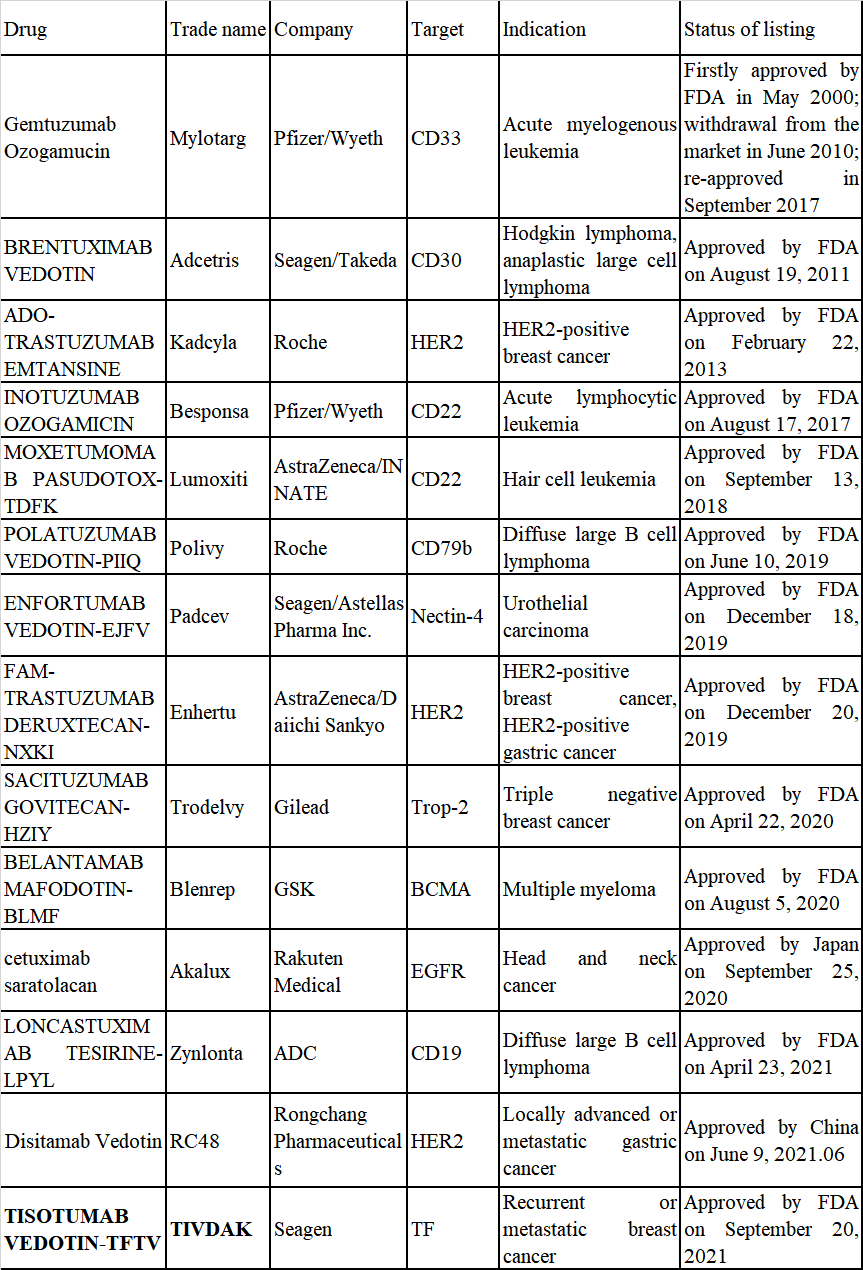
The R&D technology of ADC drug has been developing since it entered into the market. From the perspective of drug composition and development technology, the ADCs on the market have undergone three generations of technological changes. The first generation of ADC has low antigen specificity, insufficient toxicity load and unstable connector. Among them, Pfizer's Mylotarg is the representative one. The second generation of ADC, represented by Adcetris jointly developed by Seagen/Takeda and Kadcyla from Roche, generally adopted small molecules with stronger toxicity, which overcame the shortcoming of insufficient toxicity load of the first generation. However, the traditional chemical coupling method was still adopted, and the joint stability was not good. It was easy to crack in blood, causing serious toxic and side effects. The third generation of ADC solved the problem of poor uniformity of antibody coupling of the previous generation. The use of site-specific coupling makes the distribution, metabolism and excretion of antibodies easier in human body. The representative drugs include Lumoxiti of AstraZeneca, Polivy of Roche, Blenrep of GSK, etc.
According to the market data, the sales volume of ADC is amounting year by year because of the good therapeutic effect. Among them, Roche's Kadcyla (ado-trastuzumab emtansine) is the best seller of ADC at present, with global sales of 1.745 billion Swiss francs (about 1.946 billion US...

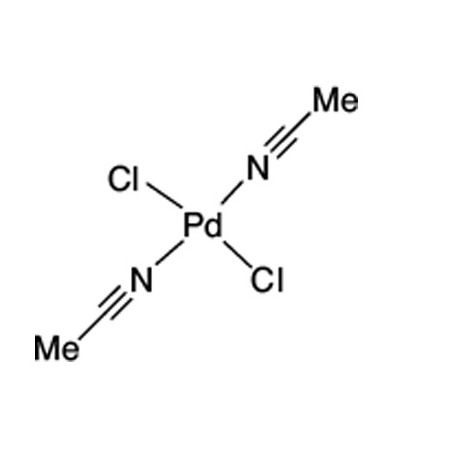
![PdCl2 (Amphos)2, dichlorobis[di-tert-butyl(4-dimethylaminophenyl)phosphine]palladium(II)](https://eimg.pharmasources.com/image/20240603/nj9olu79NthaFgIcRYGB8ZWgwyE9elI0gV8OYR87.jpg)
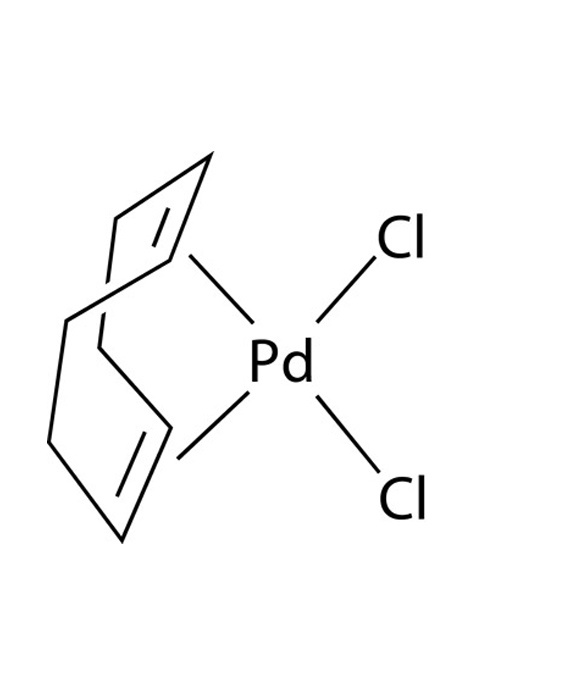
![PdCl2 [P(tBu)2Ph]2, Dichlorobis(di-tert-butylphenylphosphine)palladium(Ⅱ)](https://eimg.pharmasources.com/image/20240603/BBSK42hFS4lKl59Lx3vKzukJHNIusrPHdEEZOCJq.jpg)






















 (All Rights Reserved)