
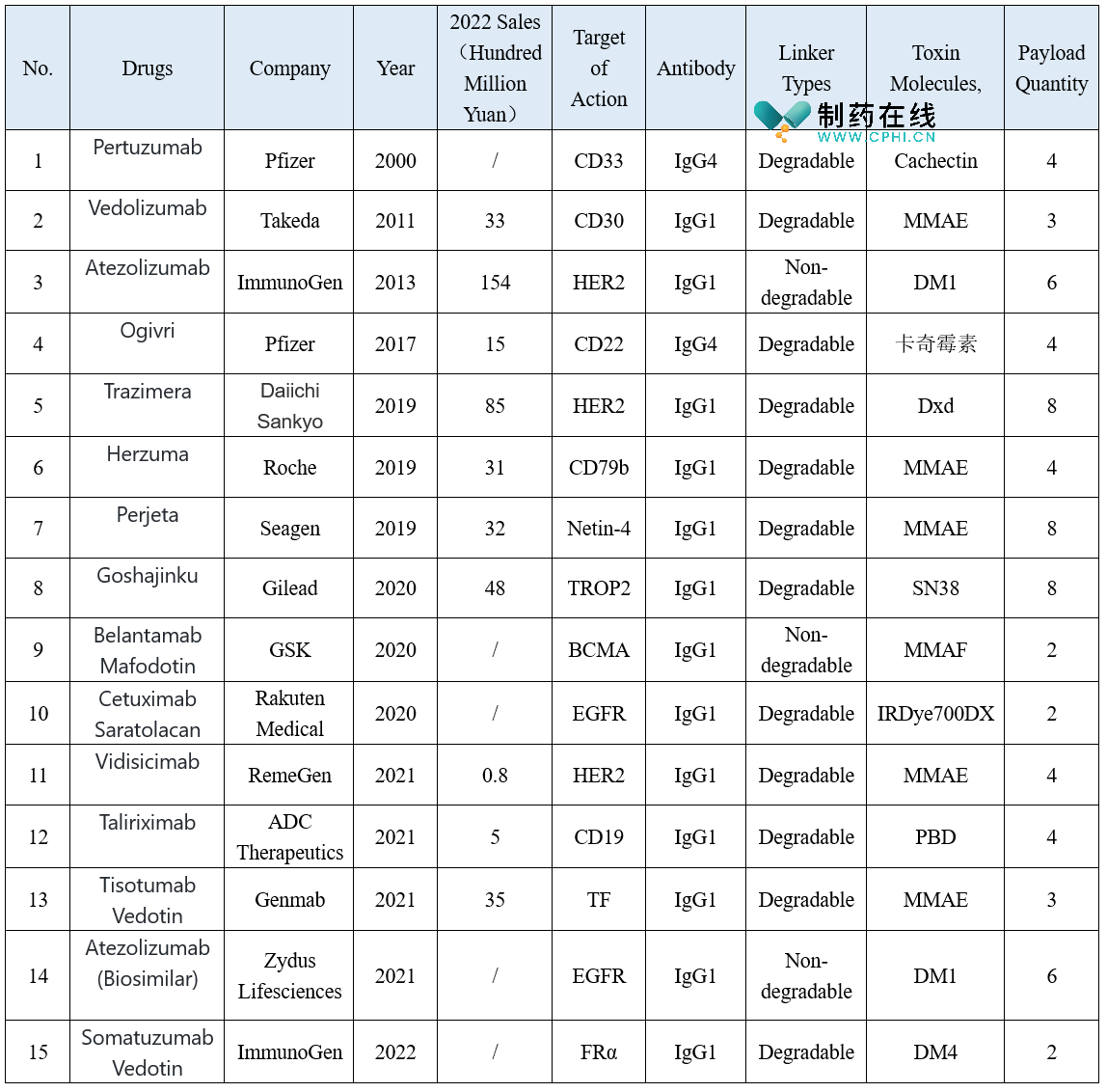
Antibody-drug conjugates (ADCs) are a class of drugs composed of antibodies targeting tumor antigens and a variable number of small molecule toxins linked through connectors. The antibody component functions in targeted localization, achieving the targeted aggregation of the drug. Currently, the development primarily focuses on mature monoclonal antibodies, while ADC drugs with bispecific/multispecific antibodies are still in the early exploration stage. The small molecule toxins mainly consist of chemotherapeutic agents with tumor-killing effects, categorized as DNA inhibitors, microtubule inhibitors, topoisomerase inhibitors, etc., with microtubule inhibitors being the primary type at present. The connectors are divided into degradable and non-degradable types, with degradable connectors capable of disintegrating upon entering cells, releasing toxin molecules and enhancing their tumor-killing effects, gradually becoming the mainstream direction of development. At present, a total of 15 ADC drugs have been approved for marketing globally, and this article will systematically inventory the marketed drugs one by one.
Table: Global Marketed ADC Drugs Situation
1. Gemtuzumab ozogamicin
Gemtuzumab ozogamicin is the first ADC drug approved by the FDA, targeting CD33. It is a humanized IgG4 antibody conjugated with a calicheamicin derivative through disulfide bonds. This drug can specifically bind to leukemia cells expressing CD33, leading to internalization and subsequent hydrolysis of the linker, releasing calicheamicin into the cell nucleus where it binds to DNA, causing double-strand breaks and ultimately leading to cell death. It was intended for the treatment of relapsed AML in patients aged 60 and above who were not fit for other chemotherapy, but due to lack of significant clinical efficacy evidence and substantial hepatotoxicity, it has been withdrawn from the market.
2. Brentuximab vedotin
Brentuximab vedotin is an ADC drug targeting CD30, consisting of a protease-cleavable linker that maintains stability in the bloodstream and releases MMAE upon internalization into CD30-expressing cells, leading to targeted cell death. It is used for the treatment of systemic anaplastic large cell lymphoma, classical Hodgkin lymphoma, primary cutaneous anaplastic large cell lymphoma, or mycosis fungoides. It was approved for marketing domestically in 2020 and was included in the national medical insurance directory in 2022. The price was adjusted to 7202 yuan/50ml, representing a 54% reduction, effectively reducing the financial burden on lymphoma patients.
3. Trastuzumab emtansine
Trastuzumab emtansine is a HER2-targeting ADC drug containing emtansine, which is irreversibly conjugated to trastuzumab through a stable linker, exerting its cytotoxic effect on tumor cells. It is indicated for the treatment of HER2-positive metastatic breast cancer in patients previously treated with trastuzumab and a taxane, either separately or in combination. It was approved for marketing domestically in 2020, making it the first ADC drug to be marketed in the country. In 2022, global sales exceeded 15 billion yuan, ranking it at the top of the ADC drug market, demonstrating significant clinical treatment advantages.
4. Inotuzumab ozogamicin
Inotuzumab ozogamicin is an ADC drug targeting CD22, composed of inotuzumab and calicheamicin derivative linked by a degradable linker. It is used for the treatment of relapsed or refractory B-cell precursor acute lymphoblastic leukemia in adults. It was launched in China in 2021, and clinical results show that compared to standard therapy (standard intensive chemotherapy), inotuzumab ozogamicin achieves higher complete remission rates, longer progression-free survival,...

























 (All Rights Reserved)