Vitamin K1 injection is indicated as an antidote to anticoagulant drugs of the coumarin type in the treatment of haemorrhage or threatened haemorrhage, associated with a low blood level of prothrombin or factor VII.
*The following content is generated by AI and is for reference only.
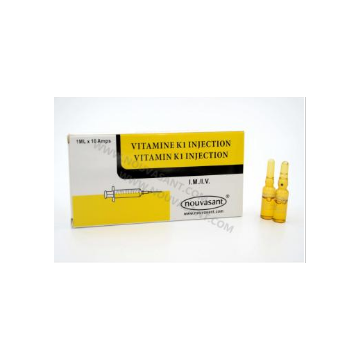
Vitamin K1 Injection 10mg/1ml is a sterile parenteral preparation containing phytonadione, the synthetic form of Vitamin K. Its primary therapeutic application is the rapid reversal of hypoprothrombinemia and the correction of coagulation defects caused by Vitamin K deficiency or anticoagulant therapy. It is critically indicated for patients receiving oral coumarin or indandione derivatives who exhibit severe bleeding or require urgent surgical intervention. Additionally, it serves as an antidote for overdose of these anticoagulants and treats hemorrhagic disease in newborns when intramuscular administration is not feasible or contraindicated. The drug functions by acting as a cofactor for the hepatic synthesis of clotting factors II, VII, IX, and X, as well as proteins C and S, thereby restoring normal blood coagulation time.
Administration is typically performed via deep intramuscular injection, though subcutaneous routes are generally discouraged due to potential irritation and erratic absorption. Intravenous administration requires extreme caution; it must be given slowly over several minutes to avoid life-threatening anaphylactoid reactions, including hypotension, dyspnea, and cardiac arrest. Consequently, IV use is reserved strictly for emergencies where IM injection is impossible.
Key precautions include avoiding use in patients with known hypersensitivity to phytonadione or any component of the formulation. Patients with liver dysfunction may exhibit a diminished response, requiring higher doses or alternative management strategies. Special attention is warranted during pregnancy and lactation, as safety profiles vary based on specific clinical contexts. Concurrent use with other medications, particularly those affecting coagulation like warfarin, necessitates careful monitoring of prothrombin time (PT) and international normalized ratio (INR) to prevent under- or over-correction. Storage should be at controlled room temperature, protected from light, as exposure can degrade the active ingredient. This medication is a vital tool in emergency hemostasis but demands precise dosing and vigilant clinical oversight to ensure patient safety and efficacy.





 (All Rights Reserved)