Product Description
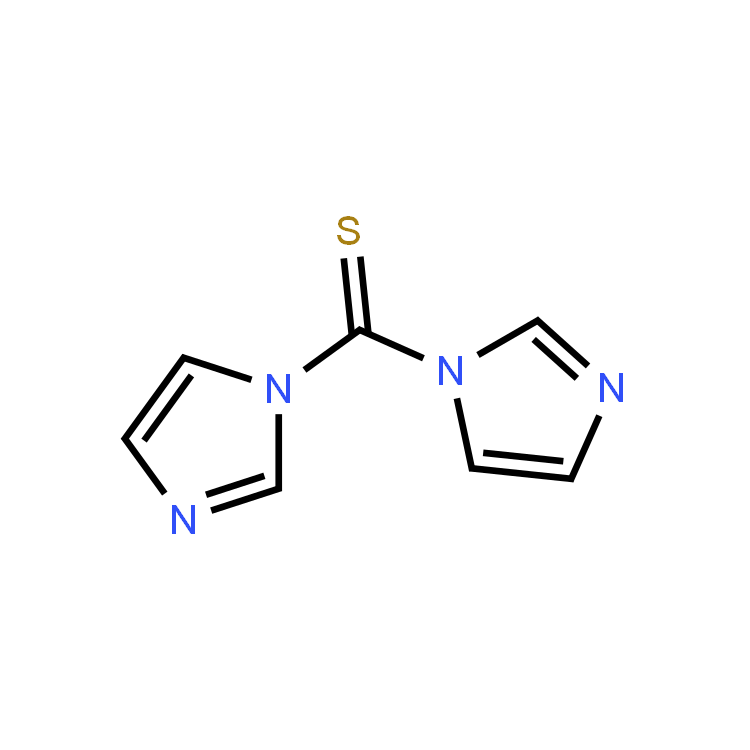
Thiocarbonyldiimidazole、6160-65-2
AI Product Description
*The following content is generated by AI and is for reference only.
Thiocarbonyldiimidazole (TCI) is a versatile and highly reactive organosulfur reagent widely utilized in organic synthesis, particularly for the activation of carboxylic acids. With the chemical formula C7H6N4S and the CAS Registry Number 2180-93-0, TCI serves as an efficient alternative to traditional coupling agents like thionyl chloride or carbodiimides. Its primary function lies in converting carboxylic acids into acyl imidazoles, which are highly activated intermediates capable of undergoing nucleophilic substitution with various amines, alcohols, or thiols under mild conditions. This unique property makes TCI indispensable in peptide chemistry, where it facilitates the formation of peptide bonds without requiring harsh acidic environments that might degrade sensitive amino acid side chains.
Beyond peptide synthesis, TCI finds extensive application in the preparation of heterocyclic compounds, including thiadiazoles and other sulfur-containing heterocycles essential for pharmaceutical development. The reagent also plays a crucial role in carbohydrate chemistry, enabling the selective glycosylation of sugars by activating hydroxyl groups. Compared to similar reagents, TCI offers distinct advantages such as high stability, ease of handling, and minimal generation of toxic byproducts, making it environmentally friendlier than many legacy alternatives. The reaction mechanism typically involves the nucleophilic attack of the carboxylate oxygen on the electrophilic carbon of TCI, followed by the displacement of an imidazole molecule to form the active acyl imidazole species.
Due to its broad reactivity profile, TCI is frequently employed in the synthesis of complex natural products, drug candidates, and advanced materials. Researchers appreciate its ability to proceed efficiently at room temperature or slightly elevated temperatures, often yielding high purity products with excellent stereoselectivity. Furthermore, the resulting imidazole leaving group can be easily removed during workup, simplifying purification processes. As the demand for efficient and sustainable synthetic methods grows, Thiocarbonyldiimidazole remains a cornerstone reagent in modern medicinal chemistry laboratories, supporting the rapid development of novel therapeutics and functional molecules across diverse scientific disciplines.





 (All Rights Reserved)
![8-Oxa-1,3-diazaspiro[4.5]decane-2,4-dione](https://eimg.pharmasources.com/image/product/20250403/60fa7223d5a34f24138486ceea0ffb15jpg)
![6,8-Dioxo-5,7-diazaspiro[3.4]octane-2-carboxylic acid](https://eimg.pharmasources.com/image/product/20250403/02effeb5a7639bc84ff1f3add3c0c64fjpg)
![8,16-Diazadispiro[6.1.6.2]heptadecan-17-one](https://eimg.pharmasources.com/image/product/20250403/ca91cba8b87e53fc879f8d8764873a40jpg)