Product Description
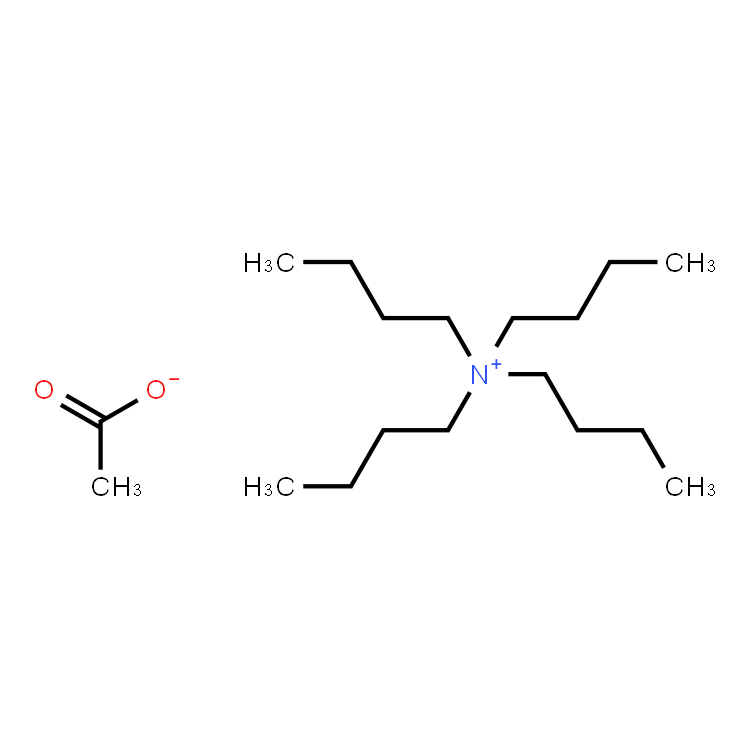
Tetrabutylammonium acetate、10534-59-5
AI Product Description
*The following content is generated by AI and is for reference only.
Tetrabutylammonium acetate is a widely utilized quaternary ammonium salt in modern organic synthesis and analytical chemistry. With the chemical formula C16H35NO2 and the CAS Registry Number 2980-47-0, this compound serves as a critical phase-transfer catalyst and a source of nucleophilic acetate ions. Its molecular structure consists of a central nitrogen atom bonded to four butyl chains and an acetate counterion, granting it excellent solubility in both polar and non-polar organic solvents, including dichloromethane, acetonitrile, and dimethyl sulfoxide. This unique solubility profile allows for efficient reaction management across different phases without requiring additional surfactants.
The primary application of tetrabutylammonium acetate lies in facilitating phase-transfer catalysis (PTC). It effectively transports anionic species from an aqueous phase into an organic phase, significantly accelerating reactions such as alkylations, condensations, and oxidations. Unlike some other quaternary ammonium salts, its acetate counterion is particularly useful when mild basicity or specific nucleophilicity is required, making it ideal for esterification processes and the generation of enolates under mild conditions. Furthermore, it acts as a buffer in various synthetic protocols where pH control is essential to prevent side reactions or decomposition of sensitive substrates.
In pharmaceutical research, this reagent is frequently employed in the synthesis of complex drug intermediates, enabling high yields and improved selectivity in multi-step sequences. Its stability at room temperature and ease of handling make it a preferred choice for laboratory-scale optimizations and pilot-scale production. Additionally, tetrabutylammonium acetate finds niche applications in electrochemistry and materials science, where it functions as an electrolyte additive or a precursor for functionalized polymers. While generally stable, care should be taken during storage to avoid moisture absorption, which could alter its efficacy. Overall, tetrabutylammonium acetate remains an indispensable tool for chemists seeking efficient, versatile, and reliable solutions in diverse synthetic environments, bridging the gap between aqueous and organic reaction systems with remarkable precision.





 (All Rights Reserved)
![8-Oxa-1,3-diazaspiro[4.5]decane-2,4-dione](https://eimg.pharmasources.com/image/product/20250403/60fa7223d5a34f24138486ceea0ffb15jpg)
![6,8-Dioxo-5,7-diazaspiro[3.4]octane-2-carboxylic acid](https://eimg.pharmasources.com/image/product/20250403/02effeb5a7639bc84ff1f3add3c0c64fjpg)
![8,16-Diazadispiro[6.1.6.2]heptadecan-17-one](https://eimg.pharmasources.com/image/product/20250403/ca91cba8b87e53fc879f8d8764873a40jpg)