Product Description
Reference Standards &Impurity
AI Product Description
*The following content is generated by AI and is for reference only.
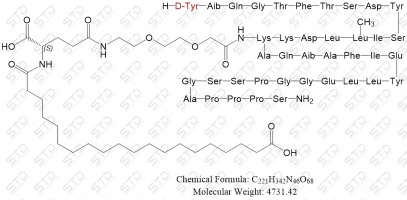
Semaglutide is a potent glucagon-like peptide-1 (GLP-1) receptor agonist developed by Novo Nordisk, revolutionizing the management of type 2 diabetes and obesity. Chemically, it is a synthetic analog of human GLP-1, modified with fatty acid side chains to extend its half-life through albumin binding, allowing for once-weekly subcutaneous administration. Its molecular formula is C187H291N45O59, and it carries the CAS registry number 910463-68-2. These structural modifications render it highly resistant to degradation by dipeptidyl peptidase-4 (DPP-4), ensuring sustained therapeutic efficacy.
Primarily marketed under brand names such as Ozempic for glycemic control and Wegovy for weight management, Semaglutide mimics the action of the endogenous hormone GLP-1. It works by stimulating insulin secretion in a glucose-dependent manner, suppressing inappropriate glucagon secretion, slowing gastric emptying, and acting on appetite centers in the hypothalamus to reduce food intake. Clinical trials have demonstrated significant benefits, including substantial reductions in HbA1c levels, meaningful weight loss exceeding 15% in some patients, and improved cardiovascular outcomes in individuals with established heart disease. Beyond its metabolic applications, ongoing research explores its potential in treating non-alcoholic steatohepatitis (NASH) and other conditions related to metabolic dysfunction.
The drug is administered via pre-filled pen devices, offering convenience and adherence advantages over daily injections. While generally well-tolerated, common side effects include nausea, vomiting, diarrhea, and constipation, which are often transient. Rare but serious risks involve thyroid C-cell tumors in rodents, pancreatitis, and gallbladder issues, necessitating careful patient screening. As a landmark innovation in pharmacotherapy, Semaglutide represents a paradigm shift from traditional glucose-lowering agents to multifaceted metabolic regulators, offering hope for millions struggling with chronic metabolic diseases worldwide. Its widespread adoption underscores the growing importance of targeting incretin pathways in modern medicine.












 (All Rights Reserved)