*The following content is generated by AI and is for reference only.
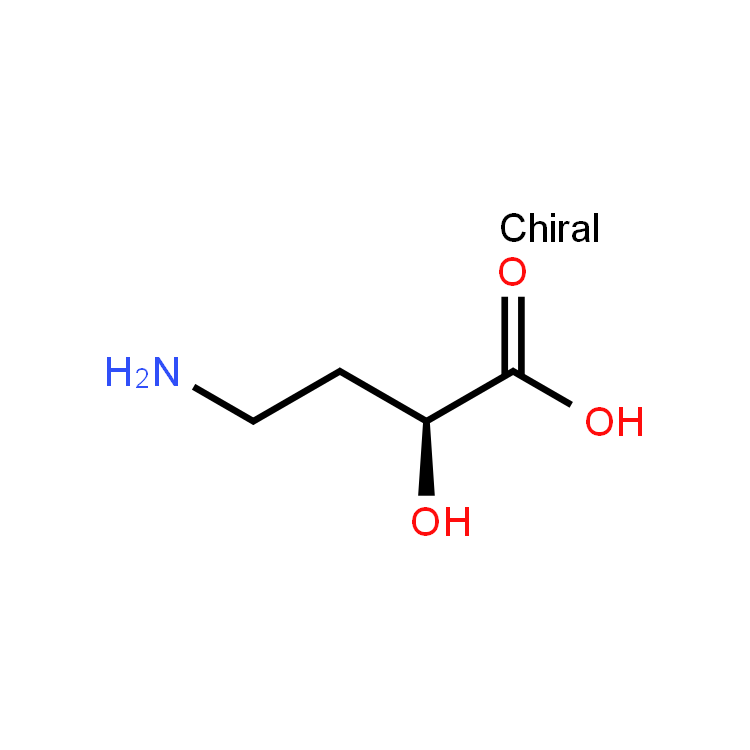
(S)-4-Amino-2-hydroxybutyric acid is a chiral organic compound belonging to the class of non-proteinogenic amino acids. With the molecular formula C4H9NO3 and a molecular weight of approximately 119.12 g/mol, this substance features a unique structure containing both an amino group and a hydroxyl group attached to a butyric acid backbone. The specific stereochemistry at the second carbon position, denoted as the (S)-enantiomer, is crucial for its biological activity and potential applications in pharmaceutical synthesis. While the CAS registry number for this specific enantiomer is widely recognized within chemical databases, precise identification often requires cross-referencing with specialized suppliers due to the existence of racemic mixtures or alternative stereoisomers like the (R)-form.
This compound serves as a vital building block in modern medicinal chemistry and peptide engineering. Its primary utility lies in the synthesis of complex bioactive molecules, particularly those requiring specific stereochemical configurations to interact effectively with biological receptors. Researchers frequently utilize (S)-4-amino-2-hydroxybutyric acid as a precursor for developing novel antibiotics, enzyme inhibitors, and peptidomimetics designed to mimic natural protein structures while offering enhanced metabolic stability. The presence of the hydroxyl group allows for further functionalization, enabling chemists to introduce diverse side chains or conjugate the molecule with other therapeutic agents.
In academic and industrial research settings, this chiral amino acid is employed to study structure-activity relationships (SAR) and to construct libraries of compounds for high-throughput screening. Its ability to participate in hydrogen bonding networks makes it an excellent candidate for designing inhibitors targeting proteases and kinases involved in various disease pathways. Furthermore, due to its structural similarity to standard amino acids yet distinct physicochemical properties, it aids in improving the solubility and bioavailability of drug candidates. As the demand for targeted therapies grows, the role of such specialized non-natural amino acids becomes increasingly significant in advancing drug discovery pipelines. Strict quality control and purity verification are essential when sourcing this material, ensuring that the correct enantiomeric excess is maintained for reliable experimental outcomes and regulatory compliance in pharmaceutical development.