Product Description
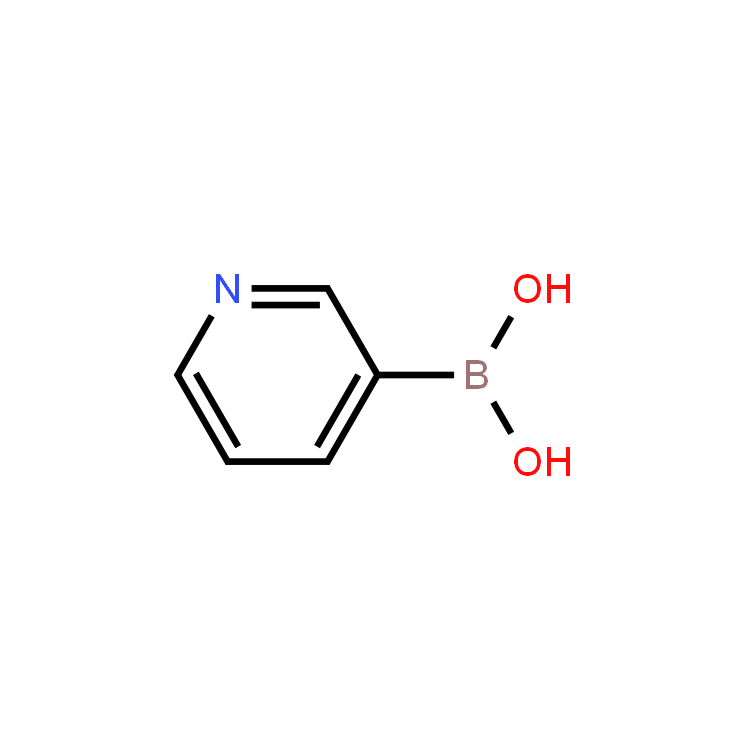
Pyridine-3-boronic acid、1692-25-7
AI Product Description
*The following content is generated by AI and is for reference only.
Pyridine-3-boronic acid, chemically known as 3-pyridylboronic acid, is a versatile heterocyclic organoboron compound widely utilized in modern organic synthesis. Its molecular formula is C5H6BNO2, and it carries the CAS registry number 1480-76-0. Structurally, this molecule features a pyridine ring substituted with a boronic acid group at the meta position (position 3), combining the electronic properties of the nitrogen-containing aromatic system with the reactivity of the boron center.
The primary application of Pyridine-3-boronic acid lies in transition metal-catalyzed cross-coupling reactions, most notably the Suzuki-Miyaura coupling. In these transformations, it serves as a crucial nucleophilic partner to couple with various aryl or vinyl halides, enabling the efficient construction of biaryl and heteroaryl frameworks. This capability makes it indispensable for synthesizing complex pharmaceutical intermediates, agrochemicals, and functional materials. The presence of the pyridine nitrogen atom offers unique advantages, such as potential coordination to metal catalysts, which can sometimes enhance reaction rates or selectivity compared to non-coordinating analogs. Furthermore, the boronic acid moiety allows for facile modification into other boron derivatives, including esters or pinacol complexes, expanding its utility in multi-step synthetic sequences.
Beyond traditional coupling chemistry, this compound finds use in the development of fluorescent sensors and luminescent materials due to the specific photophysical properties of the pyridine core. Researchers also employ it in medicinal chemistry to explore structure-activity relationships (SAR) by introducing bioactive scaffolds containing nitrogen heterocycles. The compound is typically supplied as a white to off-white crystalline powder, stable under standard laboratory conditions but sensitive to moisture over prolonged periods if not stored properly. Its commercial availability supports diverse research needs across academia and industry. As a building block for advanced organic molecules, Pyridine-3-boronic acid remains a staple reagent for chemists aiming to construct nitrogen-rich architectures with high precision and efficiency.





 (All Rights Reserved)
![8-Oxa-1,3-diazaspiro[4.5]decane-2,4-dione](https://eimg.pharmasources.com/image/product/20250403/60fa7223d5a34f24138486ceea0ffb15jpg)
![6,8-Dioxo-5,7-diazaspiro[3.4]octane-2-carboxylic acid](https://eimg.pharmasources.com/image/product/20250403/02effeb5a7639bc84ff1f3add3c0c64fjpg)
![8,16-Diazadispiro[6.1.6.2]heptadecan-17-one](https://eimg.pharmasources.com/image/product/20250403/ca91cba8b87e53fc879f8d8764873a40jpg)