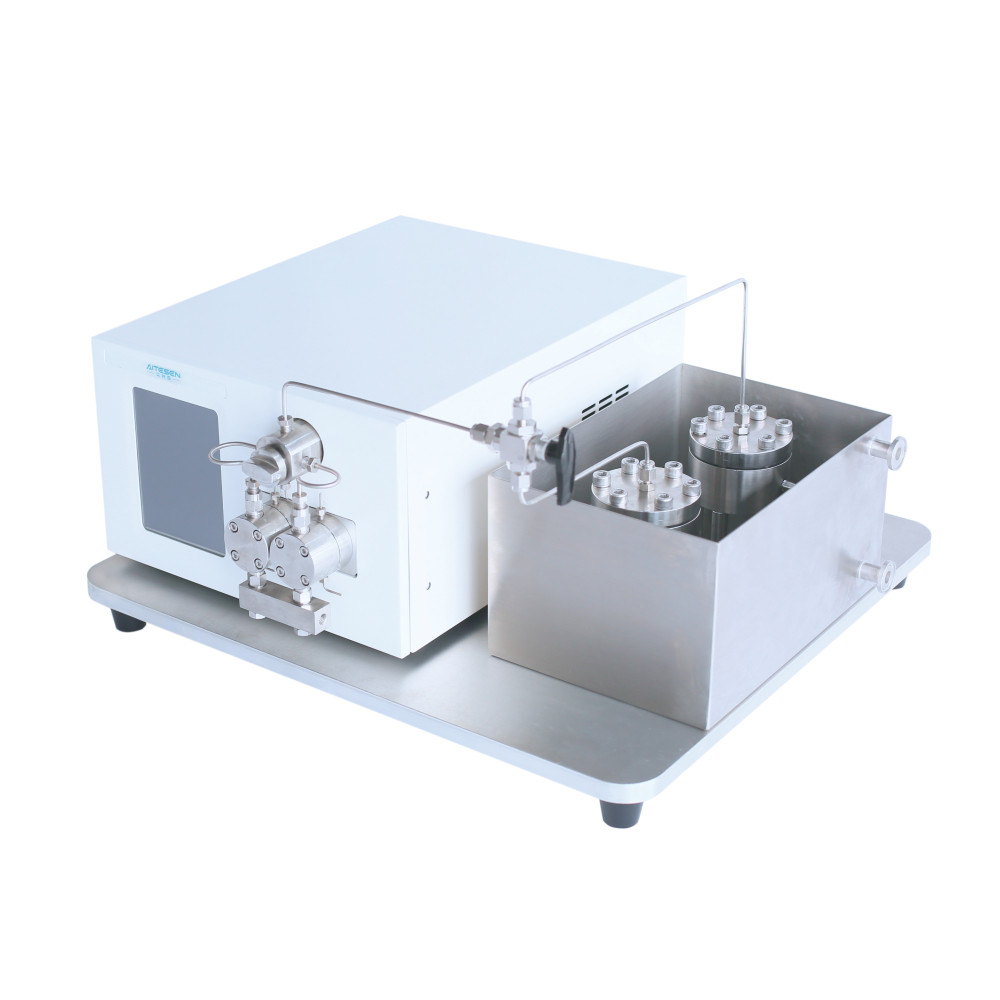
Product Description
SF type, composed of two-stage mixing structure, has the characteristics of high mixing efficiency and good mixing effect. The first stage of the S-type is a cross-tooth structure, which divides the single strand material into more small strands and mixes them with the small strands of another phase; The second stage is F-shaped, matrix structure, symmetrical matrix structure, exponentially mixed.
AI Product Description
*The following content is generated by AI and is for reference only.
This microfluidic mixing device is a high-precision laboratory instrument designed for rapid and efficient blending of fluids at the microscale. Primarily utilized in chemical synthesis, biological analysis, and pharmaceutical research, it enables researchers to achieve homogeneous mixtures within milliseconds, significantly improving reaction kinetics and yield. The device operates on the principle of chaotic advection or laminar flow manipulation, allowing precise control over fluid streams without moving parts. Its compact design integrates seamlessly with standard laboratory setups, including HPLC systems, spectrophotometers, and automated liquid handlers, making it ideal for high-throughput screening and kinetic studies where traditional bulk mixers fail due to slow diffusion rates.
Key applications include nanoparticle synthesis, enzyme kinetics assays, and DNA sequencing preparation, where exact stoichiometry and immediate reaction initiation are critical. The technology minimizes reagent consumption, often requiring only microliters of sample, which is invaluable when working with expensive or scarce biological materials. Additionally, its ability to generate stable gradients facilitates complex experiments involving cell culture stimulation or drug delivery optimization.
Users must adhere to strict operational guidelines to ensure safety and data integrity. First, all fluids must be filtered to prevent particulate clogging, as the internal channels are typically sub-millimeter in diameter. Second, pressure limits specified by the manufacturer must not be exceeded to avoid catastrophic failure of the chip housing. Third, compatibility with solvents should be verified, as certain organic compounds may degrade common polymer substrates like PDMS or cyclic olefin copolymer. Regular cleaning protocols using appropriate solvents are essential to maintain channel patency and prevent cross-contamination between runs. Furthermore, temperature control is often necessary during operation to manage exothermic reactions or maintain enzyme activity. Proper alignment with inlet tubing and secure mounting are crucial to prevent leaks under high-pressure conditions. Finally, calibration against known standards before each experimental series ensures measurement accuracy. By following these precautions, researchers can leverage this tool for reproducible, high-resolution fluid dynamics studies across diverse scientific disciplines.






 (All Rights Reserved)