Product Description
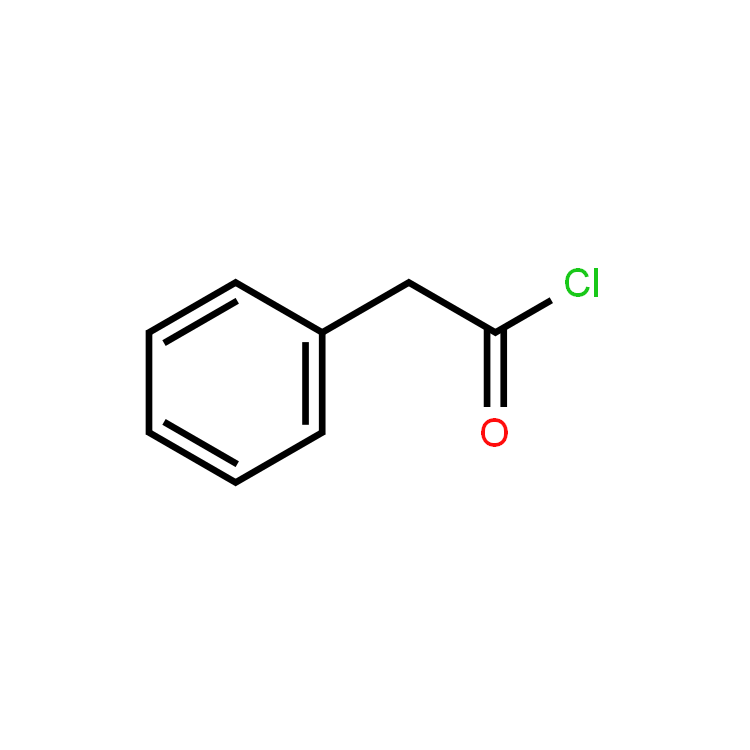
Phenylacetyl chloride、103-80-0
AI Product Description
*The following content is generated by AI and is for reference only.
Phenylacetyl chloride, chemically designated as C8H7ClO, is a highly reactive acyl chloride derivative widely utilized in organic synthesis and industrial chemistry. With the CAS number 103-84-2, this colorless to pale yellow liquid possesses a sharp, pungent odor characteristic of acid chlorides. Its molecular structure consists of a phenyl group attached to an acetyl chloride moiety, making it an essential building block for introducing the phenylacetyl group into various target molecules. The compound is primarily employed as a key intermediate in the pharmaceutical industry, serving as a precursor for the synthesis of antibiotics such as penicillins and cephalosporins, where it facilitates the formation of crucial amide bonds. Beyond drug manufacturing, phenylacetyl chloride finds significant application in the production of dyes, fragrances, and agrochemicals, contributing to the creation of complex aromatic compounds with specific biological activities. Due to its high reactivity with nucleophiles, including water, alcohols, and amines, strict handling protocols are mandatory. It reacts vigorously with moisture to release corrosive hydrogen chloride gas, necessitating storage under anhydrous conditions in cool, dry environments away from incompatible substances like strong oxidizers and bases. In laboratory settings, it is frequently used for esterification and amidation reactions to synthesize esters, amides, and other derivatives that serve as intermediates in multi-step synthetic pathways. While effective, its hazardous nature requires appropriate personal protective equipment and engineering controls to prevent exposure. As a versatile reagent, phenylacetyl chloride remains indispensable in fine chemical synthesis, enabling the efficient construction of diverse molecular architectures. Its commercial availability ensures accessibility for research institutions and large-scale manufacturing facilities alike, supporting innovation across multiple sectors of the chemical economy. Proper disposal methods must be followed to mitigate environmental impact, ensuring safety compliance throughout the product lifecycle.











 (All Rights Reserved)
![8-Oxa-1,3-diazaspiro[4.5]decane-2,4-dione](https://eimg.pharmasources.com/image/product/20250403/60fa7223d5a34f24138486ceea0ffb15jpg)
![6,8-Dioxo-5,7-diazaspiro[3.4]octane-2-carboxylic acid](https://eimg.pharmasources.com/image/product/20250403/02effeb5a7639bc84ff1f3add3c0c64fjpg)
![8,16-Diazadispiro[6.1.6.2]heptadecan-17-one](https://eimg.pharmasources.com/image/product/20250403/ca91cba8b87e53fc879f8d8764873a40jpg)