Detailed Product Description
High purity solvent,
Low residue Low water,
Low UV-absorbance,
Assuring optimum sensitivity,
Lang term stability
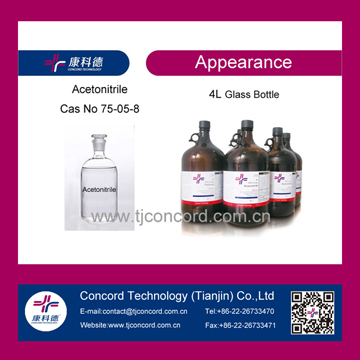
Pesticide Analysis Grade Acetonitrile Specification
CAS.No:75-05-8
Molecular formula:C2H3N
Molecular weight:41.05.
Characters: mp:(-43±2); bp:81.6; Density(20):0.7768g/cm3.
Quality indicators: main content:≥99.9%; moisture:≤0.02%.
*The following content is generated by AI and is for reference only.
Acetonitrile, chemically known as methyl cyanide, is a pivotal solvent widely utilized in the field of pesticide analysis and environmental monitoring. With the molecular formula CH₃CN and a CAS number of 75-05-8, this colorless liquid possesses distinct physical properties that make it indispensable for modern chromatographic techniques. It features a high polarity index, excellent UV transparency, and low viscosity, which are critical factors for achieving high-resolution separation in analytical chemistry.
In the context of pesticide analysis, acetonitrile serves primarily as the mobile phase in High-Performance Liquid Chromatography (HPLC) and Ultra-High-Performance Liquid Chromatography (UHPLC). Its ability to dissolve a broad spectrum of polar and non-polar pesticide residues allows for the efficient extraction and quantification of contaminants in diverse matrices, including food crops, soil samples, and water sources. When paired with detectors such as Mass Spectrometry (MS) or Diode Array Detectors (DAD), acetonitrile enables laboratories to detect trace levels of pesticides down to parts per billion (ppb) or even parts per trillion (ppt). This sensitivity is vital for ensuring compliance with strict regulatory limits set by agencies like the EPA and EFSA, thereby safeguarding public health and food safety.
Beyond chromatography, this solvent is frequently employed in sample preparation steps, such as QuEChERS (Quick, Easy, Cheap, Effective, Rugged, and Safe), where it facilitates the extraction of pesticides from complex biological tissues. Its miscibility with water and many organic solvents makes it an ideal partner for gradient elution methods, allowing analysts to separate compounds with varying affinities within a single run. Furthermore, its relatively low boiling point aids in rapid solvent removal during concentration procedures. Due to its high purity requirements in these applications, specialized grades like HPLC-grade acetonitrile are manufactured to minimize background interference and ensure reproducible results. As global demand for rigorous food safety testing grows, acetonitrile remains a cornerstone reagent in the analytical laboratory, supporting the accurate detection and management of agricultural chemicals worldwide.





 (All Rights Reserved)