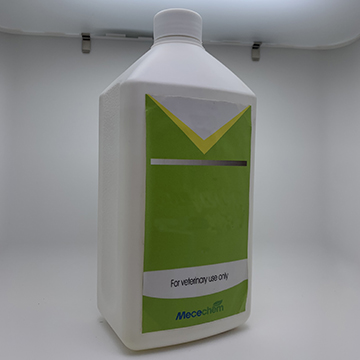
1.Product Name:Oxytetracycline Injection
2.Specification:20% 100ml
3.Packing:1 bottle/box
4.Shelf Life: 36 months
5.Registration documents are available.
If you are interested in our products, please feel free to contact us.
*The following content is generated by AI and is for reference only.
Oxytetracycline Injection is a broad-spectrum antibiotic belonging to the tetracycline class, widely utilized in veterinary medicine for the treatment of bacterial infections in various animal species. Its chemical formula is C22H24N2O9, and it carries the CAS registry number 2058-46-0. This potent antimicrobial agent functions by inhibiting protein synthesis in susceptible bacteria. It achieves this by binding reversibly to the 30S ribosomal subunit, thereby blocking the attachment of aminoacyl-tRNA to the mRNA-ribosome complex. This mechanism effectively halts bacterial growth, making it bacteriostatic against a wide range of Gram-positive and Gram-negative organisms, as well as certain atypical pathogens like Mycoplasma and Chlamydia.
The primary application of Oxytetracycline Injection lies in the management of respiratory diseases, enteric infections, and systemic conditions in livestock, poultry, and companion animals. It is particularly effective against pathogens such as *Pasteurella multocida*, *Mannheimia haemolytica*, *Escherichia coli*, and *Salmonella* species. Due to its rapid absorption and high tissue penetration following intramuscular or intravenous administration, it offers a swift therapeutic response in acute infection scenarios. The injectable formulation ensures bioavailability is maintained even when oral administration is impractical due to anorexia or severe illness.
Despite its efficacy, the prudent use of oxytetracycline is critical to mitigate the growing global concern regarding antimicrobial resistance. Regulatory bodies emphasize adherence to withdrawal periods to prevent drug residues in meat and milk products intended for human consumption. Furthermore, cross-resistance with other tetracyclines necessitates careful selection based on susceptibility testing where possible. While generally safe when used according to label directions, potential side effects include local irritation at the injection site, gastrointestinal disturbances, and photosensitivity in some species. As a cornerstone of veterinary therapeutics, Oxytetracycline Injection remains an essential tool for maintaining animal health and ensuring food safety, provided it is administered responsibly within a comprehensive herd health management program.






 (All Rights Reserved)