Product Description
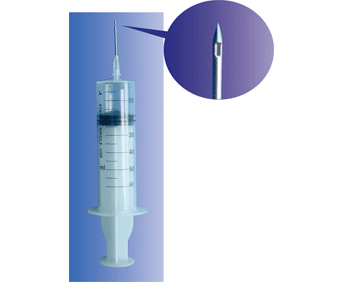
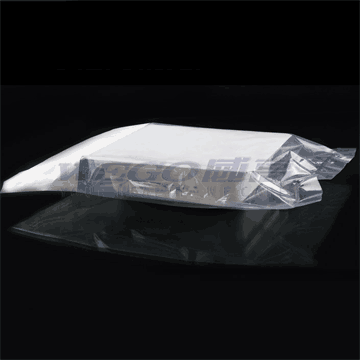
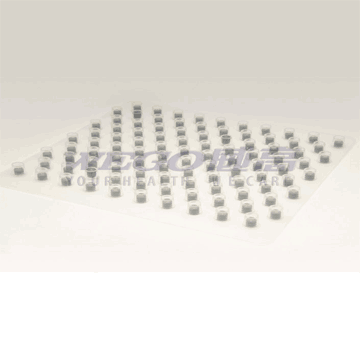
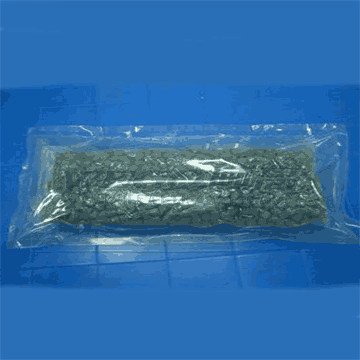
Sterile and ready-to-fill prefillable syringes are supplied to the pharmaceutical industry in special packages. Inside the tubs the syringe barrels are inserted in so-called nests for further processing. This is an ideal system for pharmaceutical production as it is particularly safe and handling is easy.
AI Product Description
*The following content is generated by AI and is for reference only.
Nest packaging refers to a specialized system designed for the secure, efficient, and sustainable transport of goods, particularly those that are fragile, perishable, or require specific environmental conditions. Widely utilized in industries ranging from agriculture and food processing to electronics and pharmaceuticals, this packaging solution mimics natural nesting structures to maximize space utilization while minimizing material waste. The core functionality lies in its interlocking design, which allows individual units to fit snugly within one another or within larger containers, preventing movement during transit and reducing the risk of damage caused by vibration or impact.
A primary advantage of nest packaging is its space efficiency. When empty, these units can be collapsed or nested tightly, significantly lowering storage volume and transportation costs for return logistics. This feature is crucial for companies aiming to optimize their supply chain footprint and reduce carbon emissions associated with shipping air. Furthermore, modern nest packaging is often manufactured from eco-friendly materials such as biodegradable plastics, recycled cardboard, or compostable fibers, aligning with global sustainability goals and consumer demand for greener alternatives.
When utilizing nest packaging, several critical precautions must be observed to ensure safety and product integrity. First, users should strictly adhere to weight limits specified by the manufacturer, as overloading can compromise the structural integrity of the nesting mechanism. Second, it is essential to inspect each unit for cracks or deformations before use; damaged components may fail under stress, leading to product loss. Third, proper stacking protocols must be followed to prevent toppling, especially when handling heavy loads on pallets. Additionally, if the packaging is intended for food contact, verifying that the materials meet relevant food safety regulations is mandatory. Finally, cleaning and sanitization procedures should be clearly defined if the packaging is reusable, ensuring no cross-contamination occurs between batches. By following these guidelines, businesses can leverage the durability and efficiency of nest packaging to enhance operational performance while maintaining high standards of product protection and environmental responsibility.






 (All Rights Reserved)